Selecting the right pressure vessel steel grades is one of the most important decisions in industrial equipment manufacturing. Pressure vessels operate under demanding conditions involving high pressure, varying temperatures, and exposure to corrosive substances. The steel used in these applications must offer strength, durability, weldability, and long-term reliability.
Different industries use different types of pressure vessel steel plates depending on their operational requirements. Boilers, storage tanks, heat exchangers, reactors, and process vessels all require materials capable of handling stress safely and efficiently.
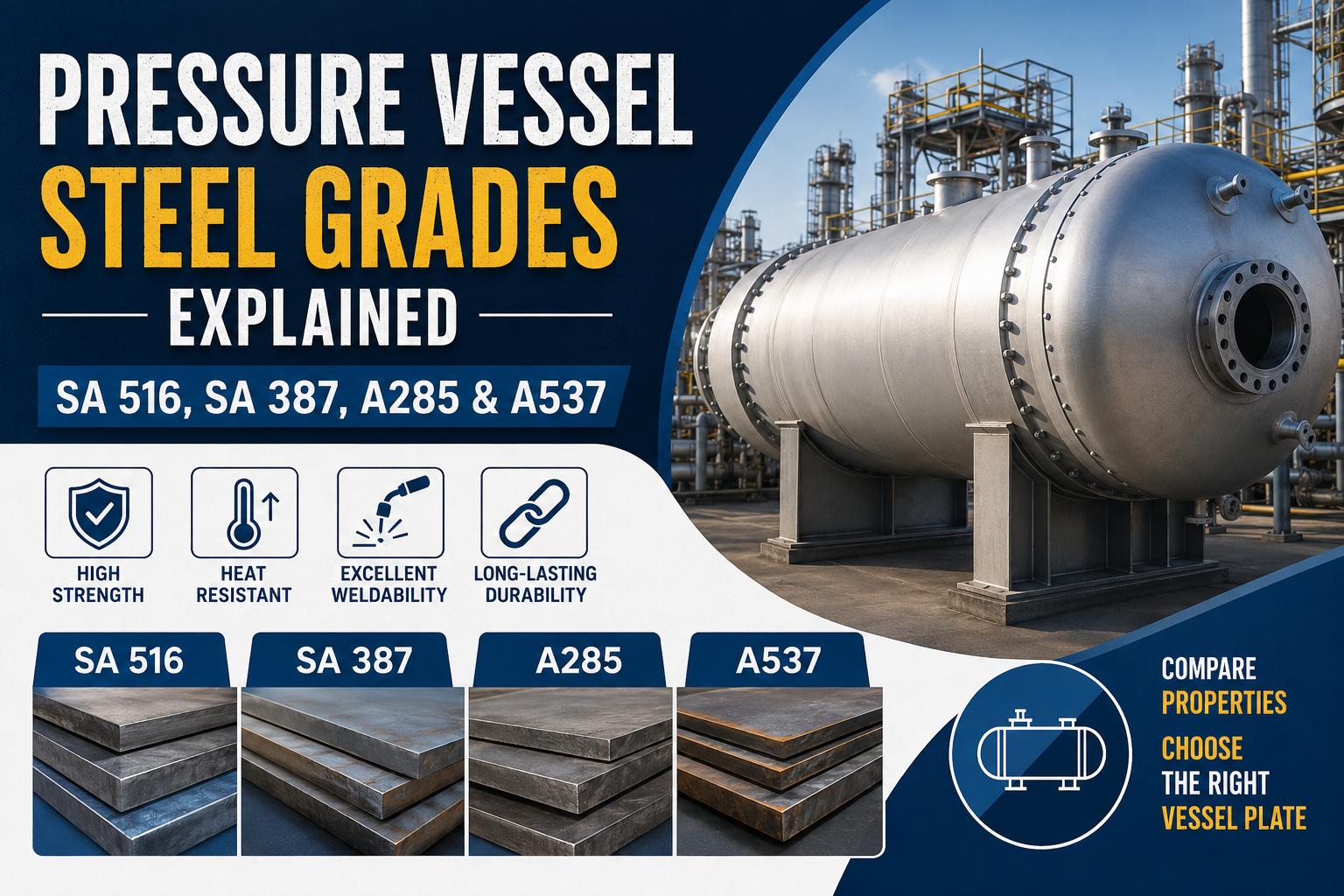
Among the most widely used grades are SA 516, SA 387, A285, and A537. Each grade has specific mechanical and chemical properties that make it suitable for certain environments. Some are designed for moderate temperatures, while others are built for high-pressure or high-temperature applications.
This blog explains the differences between these commonly used vessel plate materials, their applications, advantages, and how to choose the right grade for your project.
What Are Pressure Vessel Steel Grades?
Understanding Pressure Vessel Steel Plates
Pressure vessel steel plates are specialized steel materials manufactured for equipment that stores or processes liquids and gases under pressure. These plates are designed to maintain structural stability under extreme operating conditions.
Unlike standard structural steel, pressure vessel steel offers:
- Better tensile strength
- Improved toughness
- High-temperature resistance
- Corrosion resistance
- Enhanced weldability
These materials are produced according to ASTM and ASME standards to ensure consistent performance and safety.
SA 516 Pressure Vessel Steel Plates
Overview of SA 516 Grade
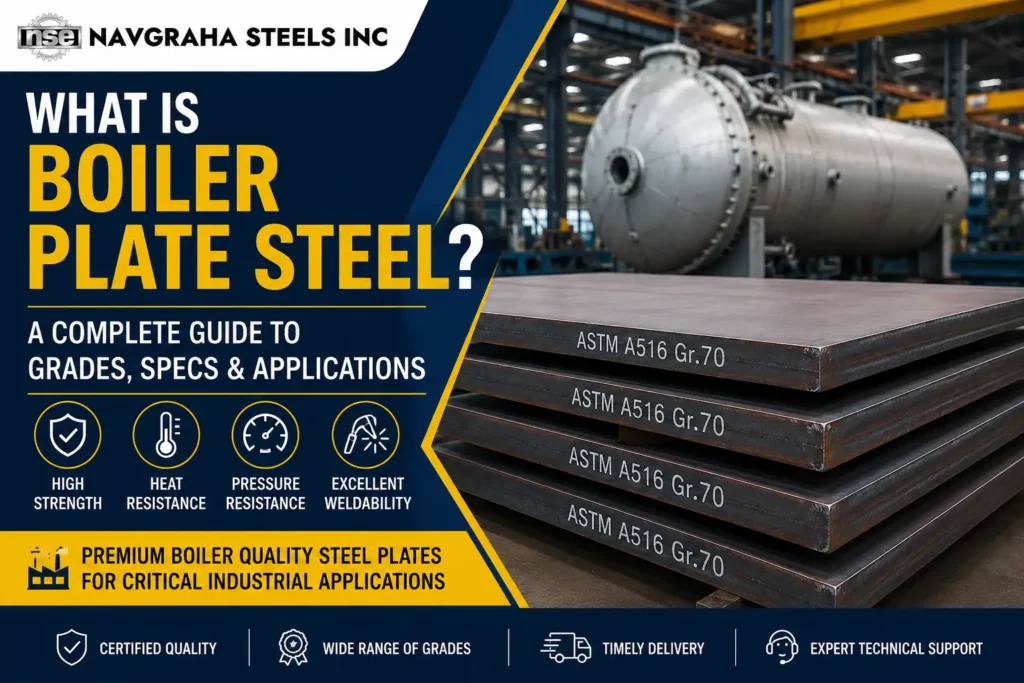
SA 516 is one of the most commonly used carbon steel grades for moderate and low-temperature pressure vessel applications. It is known for its excellent weldability, good notch toughness, and reliable mechanical properties.
The grade is available in multiple variants:
- SA 516 Grade 55
- SA 516 Grade 60
- SA 516 Grade 65
- SA 516 Grade 70
Among these, Grade 70 is the most widely used because of its higher tensile strength.
Mechanical Properties of SA 516 Grade 70
Key properties include:
- Tensile Strength: 485–620 MPa
- Yield Strength: Minimum 260 MPa
- Excellent weldability
- Good impact resistance
Applications of SA 516 Vessel Plate
SA 516 pressure vessel steel plates are commonly used in:
- Boilers
- Storage tanks
- Heat exchangers
- Oil & gas equipment
- Chemical processing units
- Industrial pressure vessels
Why Industries Prefer SA 516
SA 516 offers a balanced combination of strength, affordability, and fabrication ease, making it one of the most widely used pressure vessel steel grades in industrial applications. It performs well under moderate temperatures and pressure conditions, making it a preferred material for boilers, storage tanks, and general pressure vessel fabrication.
SA 387 Alloy Steel Plates
Overview of SA 387
SA 387 is a chromium-molybdenum alloy steel designed for elevated-temperature service. This material provides excellent heat resistance and corrosion resistance, making it suitable for demanding industrial environments.
Popular grades include:
- SA 387 Grade 11
- SA 387 Grade 22
- SA 387 Grade 5
- SA 387 Grade 91
Benefits of Chromium and Molybdenum
Chromium improves:
- Corrosion resistance
- Oxidation resistance
- Heat resistance
Molybdenum enhances:
- High-temperature strength
- Creep resistance
- Durability under stress
Applications of SA 387 Pressure Vessel Steel Plates
SA 387 is widely used in:
- Refineries
- Petrochemical plants
- Thermal power plants
- High-temperature reactors
- Industrial boilers
- Heat exchangers
Why SA 387 Is Used in High-Temperature Applications
This grade maintains its strength and structural integrity even at elevated temperatures. Industries handling thermal stress and corrosive chemicals rely on SA 387 for long-term operational safety.
A285 Pressure Vessel Steel Plates
Overview of A285
A285 is a carbon steel grade intended for fusion-welded pressure vessels operating at low to intermediate tensile strength levels.
The material is available in:
- Grade A
- Grade B
- Grade C
A285 Grade C is the most commonly used option.
Mechanical Properties of A285 Grade C
Typical properties include:
- Tensile Strength: 380–515 MPa
- Yield Strength: Minimum 205 MPa
- Good formability
- Excellent weldability
Applications of A285 Vessel Plate
A285 pressure vessel steel plates are commonly used for:
- Low-pressure storage tanks
- Industrial containers
- Welded pressure vessels
- Structural applications
Advantages of A285
A285 is an economical material choice for industries requiring good fabrication performance without the need for extremely high strength or heat resistance.
A537 Pressure Vessel Steel Plates
Overview of A537
A537 is a heat-treated carbon-manganese-silicon steel plate developed for applications requiring higher strength and toughness.
The material is supplied in:
- Class 1
- Class 2
- Class 3
A537 Class 1 is the most commonly used grade.
Mechanical Properties of A537
Key properties include:
- High tensile strength
- Improved impact resistance
- Excellent toughness
- Reliable pressure resistance
Applications of A537 Vessel Plate
A537 is used in:
- High-pressure vessels
- Offshore structures
- Chemical processing equipment
- Industrial reactors
- Heavy-duty boilers
Why A537 Is Preferred for High-Pressure Applications
The heat-treated structure of A537 provides superior strength and toughness, making it suitable for demanding industrial environments.
Comparison Between SA 516, SA 387, A285 & A537
| Grade | Material Type | Temperature Resistance | Strength | Weldability | Main Applications |
|---|---|---|---|---|---|
| SA 516 | Carbon Steel | Moderate | Medium-High | Excellent | Boilers, tanks |
| SA 387 | Alloy Steel | High | High | Good | Refineries, reactors |
| A285 | Carbon Steel | Low-Moderate | Medium | Excellent | Low-pressure vessels |
| A537 | Heat-Treated Steel | Moderate-High | High | Good | High-pressure vessels |
How to Choose the Right Pressure Vessel Steel Grade
Choosing the correct pressure vessel steel grades depends on several operational factors.
Consider Operating Temperature
- SA 387 is suitable for elevated temperatures.
- SA 516 performs well in moderate-temperature applications.
Evaluate Pressure Conditions
High-pressure environments usually require stronger grades such as A537.
Check Corrosion Exposure
Industries handling aggressive chemicals often prefer alloy grades like SA 387.
Review Fabrication Requirements
If extensive welding and forming are involved, SA 516 and A285 are often better choices.
Balance Cost and Performance
Carbon steel grades are generally more affordable than alloy steel grades, making them suitable for cost-sensitive projects.
Practical Tips Before Buying Pressure Vessel Steel Plates
Verify Material Certification
Always ensure the material complies with ASTM or ASME standards.
Check Mechanical Properties
Review tensile strength, yield strength, and toughness before finalizing material selection.
Choose Trusted Suppliers
Work with reliable manufacturers and suppliers who provide proper testing documentation.
Confirm Heat Treatment Requirements
Some applications require normalized or heat-treated plates for better performance.
Common Mistakes to Avoid
Choosing Steel Only Based on Price
Lower-cost materials may not provide the required strength or temperature resistance.
Ignoring Operating Temperature
Using the wrong grade in high-temperature environments can reduce equipment life.
Overlooking Weldability
Poor weldability may increase fabrication difficulty and maintenance issues.
Not Checking Testing Standards
Always ensure pressure vessel steel plates undergo proper quality testing.
Local Relevance: Pressure Vessel Steel Demand in India
India’s industrial sector continues to grow rapidly, increasing demand for high-quality pressure vessel steel plates across industries such as oil & gas, power generation, infrastructure, and petrochemicals.
Indian manufacturers and EPC contractors commonly use grades like SA 516 and SA 387 for pressure vessels, boilers, and storage tanks. As refinery expansion and energy projects continue across the country, the need for reliable vessel plate materials is expected to increase significantly.
Industries in Mumbai, Gujarat, Chennai, Visakhapatnam, and other industrial hubs rely heavily on certified pressure vessel steel suppliers for industrial fabrication projects.
Conclusion
Understanding the differences between SA 516, SA 387, A285, and A537 helps industries select the right pressure vessel steel grades for specific applications. Each material offers unique advantages depending on temperature, pressure, corrosion exposure, and fabrication requirements.
SA 516 is ideal for moderate-temperature applications with excellent weldability, while SA 387 is better suited for elevated-temperature environments. A285 provides an economical option for low-pressure applications, and A537 delivers superior strength for heavy-duty industrial operations.
Selecting the right pressure vessel steel plates improves equipment safety, operational efficiency, and long-term durability.
Frequently Asked Questions
What are pressure vessel steel grades?
Pressure vessel steel grades are specialized steel materials designed for manufacturing pressure-retaining equipment such as boilers, tanks, and reactors.
Which pressure vessel steel grade is best for high temperatures?
SA 387 is commonly preferred for elevated-temperature applications because of its chromium-molybdenum alloy composition.
What is SA 516 Grade 70 used for?
SA 516 Grade 70 is widely used for boilers, storage tanks, pressure vessels, and heat exchangers.
What is the difference between A285 and A537?
A285 is designed for low to moderate-pressure applications, while A537 offers higher strength and toughness for demanding pressure environments.
Why are pressure vessel steel plates heat treated?
Heat treatment improves toughness, strength, and structural stability for high-pressure applications.