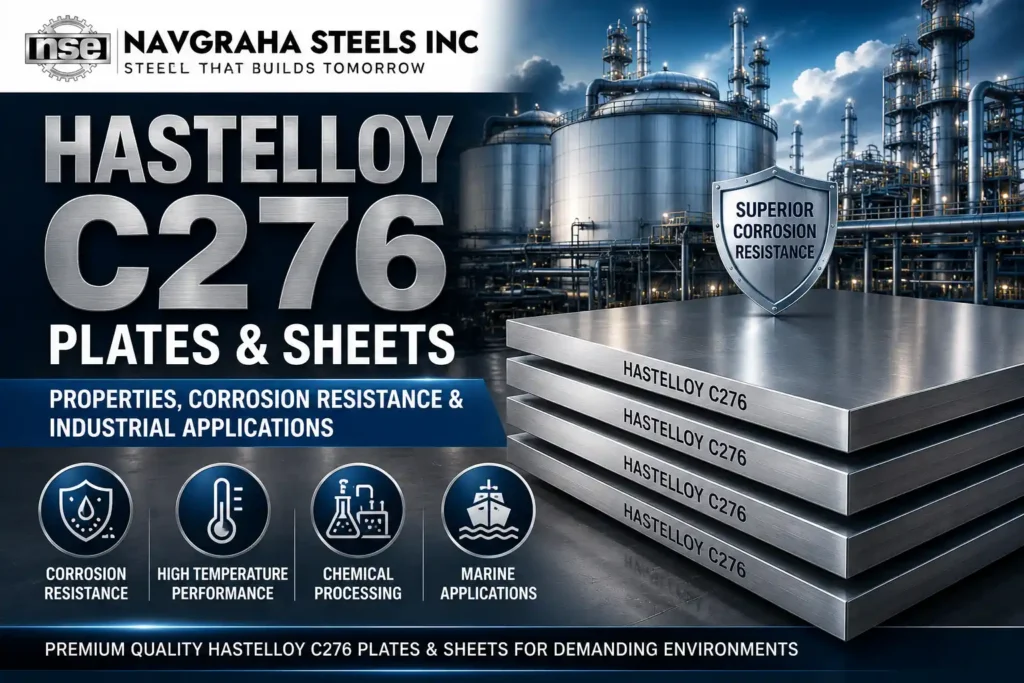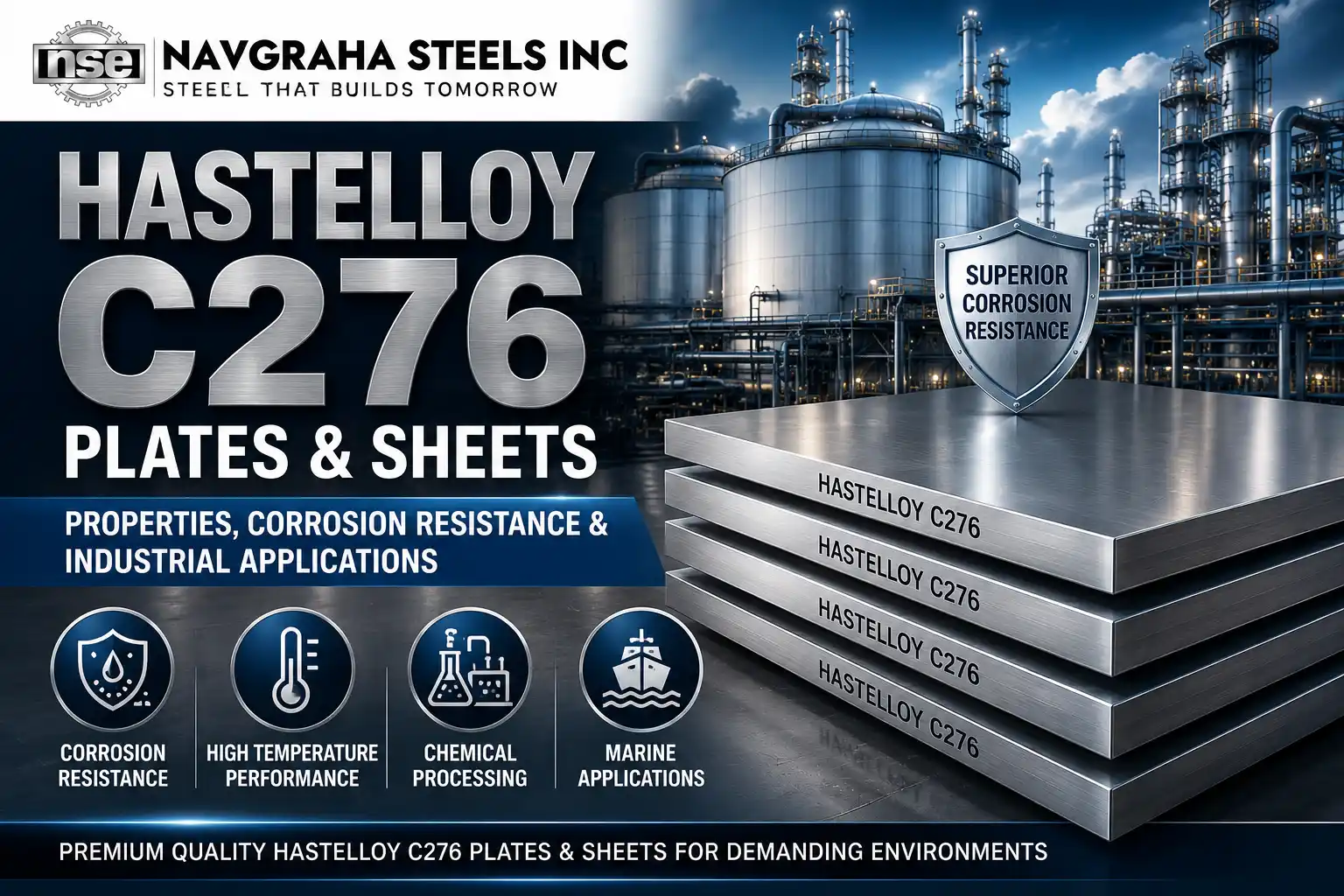
Industrial environments that involve aggressive chemicals, high temperatures, and corrosive conditions require materials capable of maintaining performance over long periods. Among the most trusted corrosion-resistant alloys available today is Hastelloy C276.
Widely used across chemical processing, petrochemical, marine, power generation, and pollution control industries, Hastelloy C276 Plates are known for their exceptional resistance to corrosion and oxidation. Their ability to withstand some of the harshest industrial environments makes them a preferred choice for engineers, fabricators, and procurement professionals worldwide.
In this guide, we explore the properties, corrosion resistance characteristics, and common applications of Hastelloy C276 plates and sheets.
What Is Hastelloy C276?
Hastelloy C276 is a nickel-molybdenum-chromium alloy designed to provide outstanding resistance to a wide range of corrosive environments.
The alloy contains significant amounts of:
- Nickel
- Molybdenum
- Chromium
- Iron
- Tungsten
This combination creates a material capable of resisting pitting, crevice corrosion, stress corrosion cracking, and oxidizing or reducing chemical environments.
A trusted Alloy C276 Supplier typically provides this material in plates, sheets, coils, and custom-cut formats for industrial projects.
Chemical Composition of Hastelloy C276
The alloy’s performance comes from its carefully balanced chemical composition.
Key Elements
Nickel
Provides excellent resistance to reducing environments and high temperatures.
Molybdenum
Improves resistance to pitting and crevice corrosion.
Chromium
Enhances oxidation resistance and overall corrosion protection.
Tungsten
Contributes additional corrosion resistance in aggressive environments.
Together, these elements make Hastelloy C276 one of the most versatile corrosion-resistant alloys available.
Key Properties of Hastelloy C276 Plates
Exceptional Corrosion Resistance
One of the most significant advantages of Hastelloy C276 Plates is their ability to resist corrosion in both oxidizing and reducing environments.
They perform exceptionally well against:
- Sulfuric acid
- Hydrochloric acid
- Chlorides
- Wet chlorine gas
- Seawater
- Chemical processing solutions
High Temperature Performance
The alloy maintains its mechanical strength and corrosion resistance at elevated temperatures, making it suitable for demanding industrial operations.
Excellent Weldability
Unlike many corrosion-resistant alloys, Hastelloy C276 can be welded using conventional techniques without compromising performance.
Superior Durability
The material offers excellent structural stability even in continuous exposure to harsh operating conditions.
Why Is Hastelloy C276 So Corrosion Resistant?
Corrosion can cause equipment failure, unplanned downtime, and expensive maintenance costs.
Hastelloy C276 is specifically designed to combat:
Pitting Corrosion
Localized attacks that create small holes in metal surfaces.
Crevice Corrosion
Corrosion occurring in confined spaces where moisture or chemicals accumulate.
Stress Corrosion Cracking
Cracks caused by the combined effects of stress and corrosive environments.
Chemical Attack
The alloy resists a broad range of acids and industrial chemicals used in processing facilities.
This makes Hastelloy C276 Sheet and plate products ideal for highly corrosive industrial environments.
Common Applications of Hastelloy C276 Plates and Sheets
Chemical Processing Industry
Used in:
- Reactors
- Heat exchangers
- Chemical storage tanks
- Processing equipment
Petrochemical Plants
Ideal for handling aggressive chemicals and high-temperature operations.
Oil & Gas Industry
Used in:
- Offshore platforms
- Processing facilities
- Pressure vessels
- Pipeline components
Marine Engineering
Hastelloy C276 performs exceptionally well in seawater environments where traditional materials may corrode rapidly.
Power Generation
Used in flue gas desulfurization systems and equipment exposed to corrosive gases.
Pollution Control Systems
Widely used in scrubbers, chimneys, and waste treatment facilities.
Advantages of Hastelloy C276 Over Other Materials
Longer Service Life
Its corrosion resistance significantly extends equipment lifespan.
Lower Maintenance Costs
Reduced corrosion means fewer repairs and replacement expenses.
Enhanced Operational Reliability
Industrial systems experience fewer failures and shutdowns.
Broad Chemical Compatibility
Suitable for a wide variety of corrosive process environments.
Excellent Fabrication Characteristics
Can be formed, machined, and welded efficiently.
How to Choose the Right Hastelloy C276 Supplier
When sourcing corrosion-resistant alloys, consider:
Material Certification
Request mill test certificates and traceability documentation.
Inventory Availability
Ensure the supplier maintains adequate stock levels for project timelines.
Technical Expertise
A knowledgeable supplier can recommend the right product specifications.
Custom Processing Capabilities
Look for suppliers offering custom cutting and sizing services.
Industry Experience
Experienced suppliers understand the demands of industrial projects.
Common Procurement Mistakes to Avoid
Choosing Materials Based Solely on Initial Cost
Lower-cost alternatives may result in higher maintenance expenses later.
Ignoring Environmental Conditions
Material selection should match the operating environment.
Overlooking Certification Requirements
Many industries require certified materials for compliance and safety.
Selecting Generic Materials for Specialized Applications
Highly corrosive environments often require advanced alloys such as Hastelloy C276.
Local Relevance: Growing Demand for Hastelloy C276 in Mumbai
Mumbai serves as one of India’s largest industrial and engineering hubs, supporting:
- Oil & Gas Operations
- Petrochemical Manufacturing
- Marine Engineering
- Chemical Processing Industries
- Power Generation Projects
As industrial facilities increasingly operate in aggressive environments, demand for high-performance materials such as Hastelloy C276 Plates continues to grow across Maharashtra and India.
Conclusion
When corrosion resistance is a critical requirement, few materials match the performance of Hastelloy C276 Plates and Sheets. Their exceptional resistance to chemicals, seawater, oxidation, and high temperatures makes them indispensable across industries such as petrochemicals, marine engineering, power generation, and chemical processing.
By choosing the right alloy and sourcing it from a trusted supplier, industries can improve equipment reliability, reduce maintenance costs, and achieve longer operational life.
Looking for premium-quality Hastelloy C276 Plates, Hastelloy C276 Sheet, or a reliable Alloy C276 Supplier in India?
Contact Navgraha Steels Inc today for expert guidance and high-performance nickel alloy solutions tailored to your industrial requirements.
Frequently Asked Questions
What are Hastelloy C276 Plates used for?
They are commonly used in chemical processing, oil & gas, marine engineering, pollution control, and power generation industries.
What makes Hastelloy C276 corrosion resistant?
Its nickel-molybdenum-chromium composition provides exceptional resistance to a wide range of corrosive chemicals and environments.
Is Hastelloy C276 suitable for seawater applications?
Yes. The alloy performs extremely well in marine and seawater environments.
Can Hastelloy C276 be welded?
Yes. Hastelloy C276 offers excellent weldability using standard industrial welding methods.
Why choose Hastelloy C276 over stainless steel?
Hastelloy C276 generally provides superior corrosion resistance in aggressive chemical and high-temperature environments.