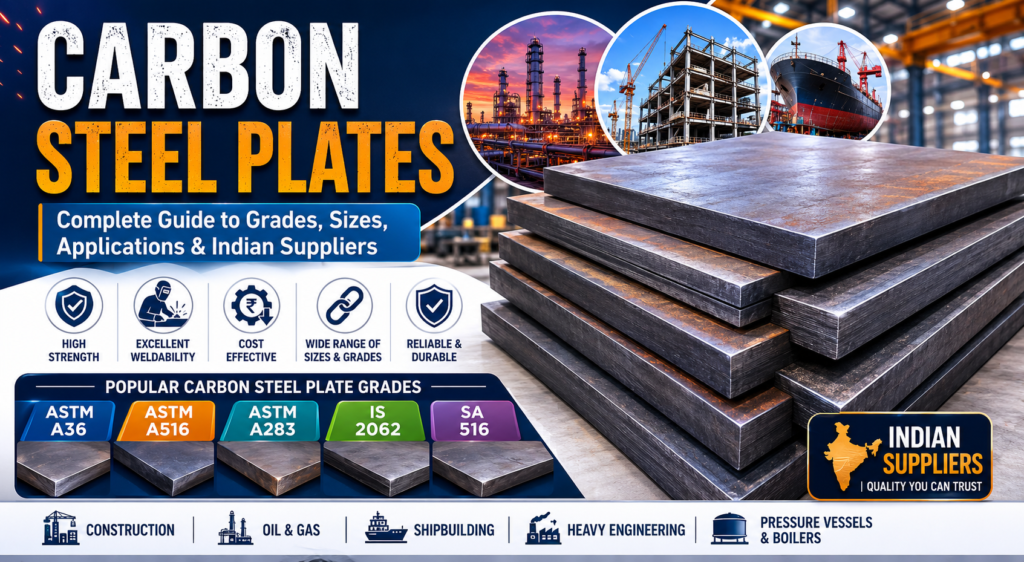
Choosing the right steel material is one of the most important decisions in any industrial, engineering, fabrication, or construction project. While both carbon steel sheets and carbon steel plates are manufactured from similar materials, they serve different purposes based on thickness, strength requirements, fabrication needs, and budget considerations.
Understanding the differences between a carbon steel sheet plate product can help engineers, procurement teams, and project managers select the most cost-effective and technically suitable material for their applications.
This guide explains the thickness classifications, common uses, pricing factors, and selection considerations for carbon steel sheets and carbon steel plates.
Understanding Carbon Steel Sheets and Carbon Steel Plates
Both sheets and plates are manufactured from carbon steel and offer excellent strength, durability, and versatility.
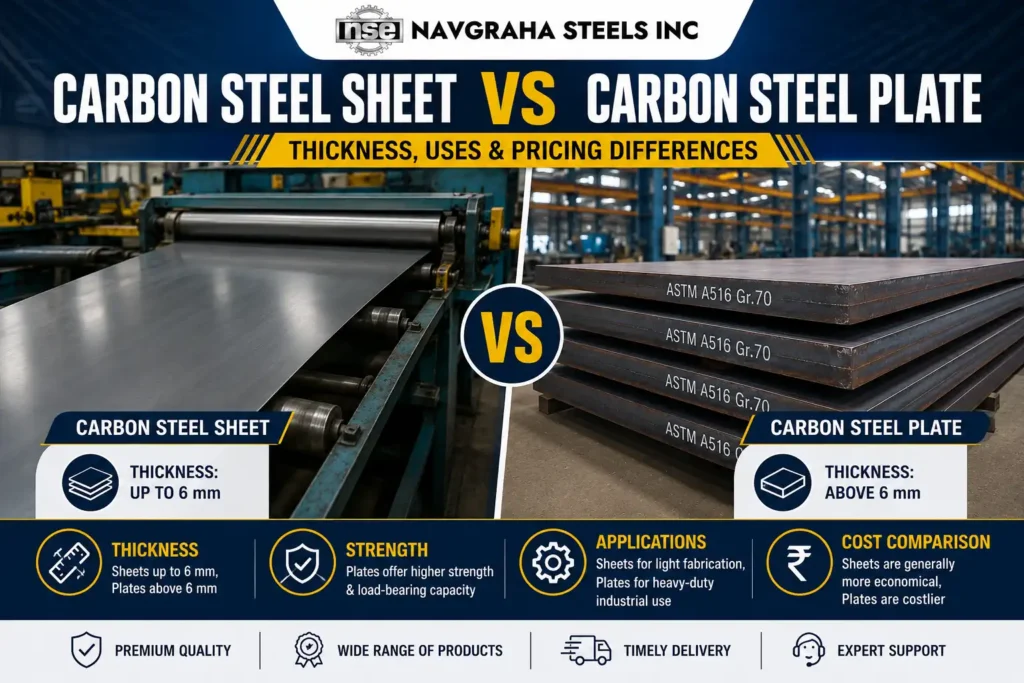
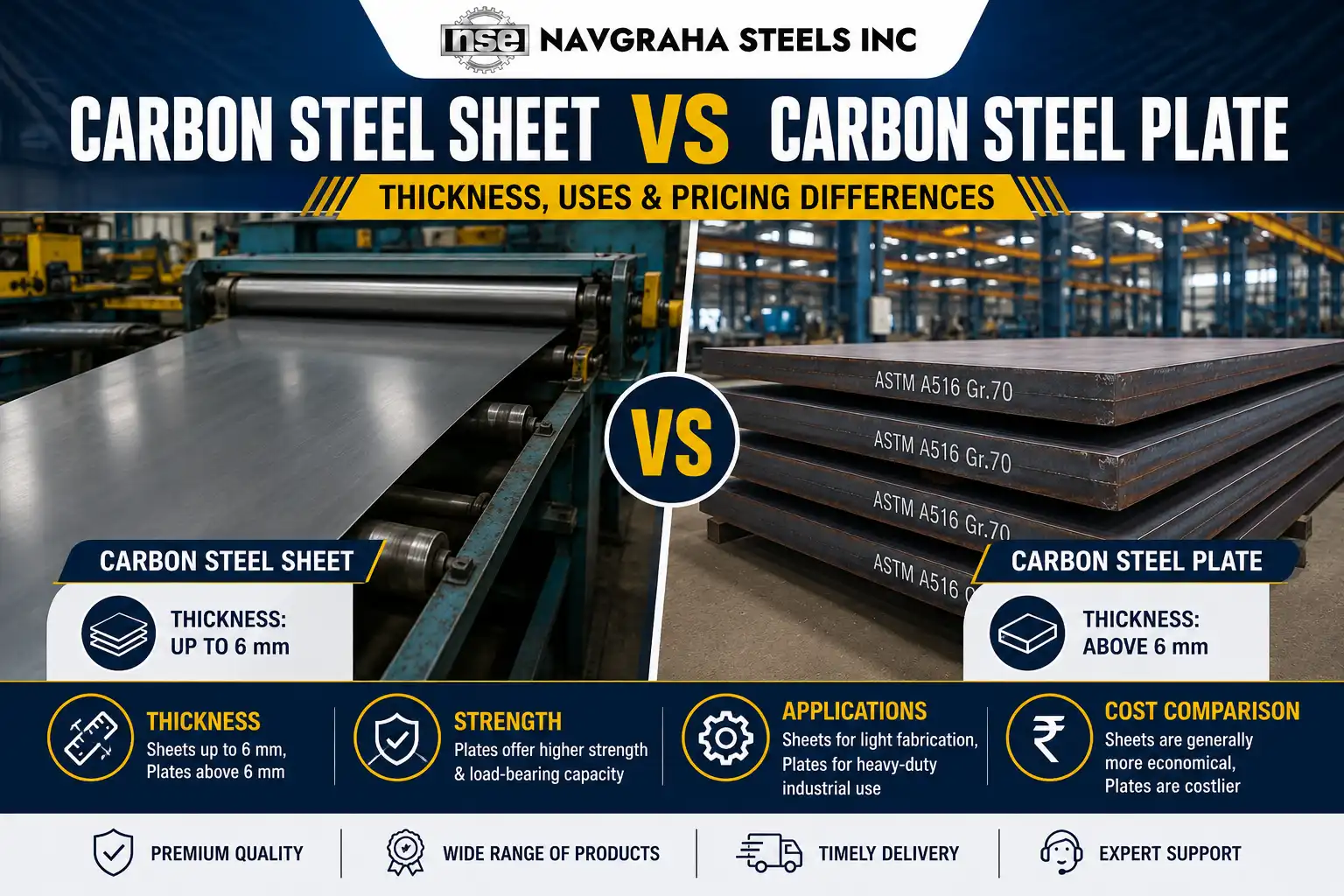
The primary distinction lies in their thickness.
What Is a Carbon Steel Sheet?
A carbon steel sheet is a flat-rolled steel product produced in relatively thin dimensions.
Typically, sheets are used where:
- Formability is required
- Weight reduction is important
- Complex fabrication is involved
- Structural loads are moderate
Carbon steel sheet metal is widely used across manufacturing, automotive, appliance, and construction industries.
What Is a Carbon Steel Plate?
A carbon steel plate is thicker and designed for applications requiring greater structural strength and load-bearing capacity.
Carbon plate steel products are commonly used in:
- Heavy engineering
- Pressure vessels
- Industrial machinery
- Structural fabrication
- Shipbuilding
Thickness Differences Explained
Thickness is the most important factor distinguishing sheets from plates.
Carbon Steel Sheet Thickness
Generally falls below 6 mm.
Common applications include:
- Enclosures
- Panels
- Automotive components
- HVAC systems
- Light fabrication
Carbon Steel Plate Thickness
Typically begins above 6 mm and extends to much heavier dimensions.
Used for:
- Structural components
- Pressure vessels
- Storage tanks
- Heavy equipment
- Industrial fabrication
Quick Comparison
| Feature | Carbon Steel Sheet | Carbon Steel Plate |
| Thickness | Up to ~6 mm | Above ~6 mm |
| Weight | Lower | Higher |
| Formability | Excellent | Moderate |
| Structural Strength | Moderate | High |
| Heavy-Duty Applications | Limited | Excellent |
Manufacturing Process Comparison
Both products originate from similar rolling processes, but production methods differ depending on thickness requirements.
Sheet Production
Carbon steel sheets are typically produced using cold rolling or thin hot rolling processes that provide:
- Better surface finish
- Tighter dimensional tolerances
- Easier forming capabilities
Plate Production
Steel plates are generally produced through heavy hot rolling operations designed to achieve:
- Greater thickness
- Higher structural strength
- Improved load-bearing capacity
Applications of Carbon Steel Sheets
Manufacturing Industry
Used for:
- Equipment covers
- Cabinets
- Industrial panels
- Machine housings
Automotive Sector
Carbon steel sheet metal is commonly used in:
- Vehicle body panels
- Structural supports
- Components and assemblies
Construction Industry
Applications include:
- Roofing
- Cladding
- Interior structures
- Architectural components
HVAC Systems
Lightweight sheet products are ideal for ducting and ventilation systems.
Applications of Carbon Steel Plates
Heavy Engineering
Carbon steel plates provide the strength required for:
- Industrial machinery
- Equipment frames
- Structural supports
Pressure Vessel Manufacturing
Pressure vessel fabricators frequently use carbon plate steel products for:
- Storage tanks
- Boilers
- Pressure vessels
Shipbuilding Industry
Steel plates are widely used in marine applications due to their strength and durability.
Infrastructure Projects
Bridges, industrial buildings, and large-scale structural frameworks often depend on carbon steel plates.
Pricing Differences Between Sheets and Plates
Pricing is influenced by several factors.
Material Thickness
Thicker plates require more raw material and processing, resulting in higher costs per unit.
Manufacturing Complexity
Plate production involves heavier rolling processes and more stringent quality controls.
Grade Selection
Specialized grades such as pressure vessel steel or boiler quality steel typically command higher prices.
Quantity Requirements
Large-volume purchases may significantly reduce per-ton costs.
Market Conditions
Steel prices fluctuate based on:
- Raw material costs
- Demand and supply
- Global steel markets
- Transportation costs
How to Choose the Right Material
Before selecting between a sheet and plate, consider:
Load Requirements
Choose plates for high-load applications and sheets for lighter structures.
Fabrication Complexity
Sheets are easier to bend, cut, and form into complex shapes.
Operating Environment
Harsh industrial conditions may require thicker plate products.
Budget Constraints
Selecting excessive thickness can unnecessarily increase project costs.
Industry Standards
Always verify compliance with applicable ASTM, ASME, or project specifications.
Common Procurement Mistakes to Avoid
Choosing Thickness Based Solely on Cost
Lower-cost materials may fail to meet structural requirements.
Ignoring Future Expansion Requirements
Future operating conditions should be considered during material selection.
Overlooking Material Certification
Certified materials help ensure compliance and reliability.
Selecting Generic Products for Specialized Applications
Pressure vessels, boilers, and heavy structures often require specific grades and specifications.
Why Industries Continue to Choose Carbon Steel Products
Carbon steel remains one of the most widely used industrial materials because it offers:
- Excellent strength
- Good weldability
- Cost-effectiveness
- Wide availability
- Versatile applications
- Reliable performance
For many engineering projects, carbon steel provides the ideal balance between performance and affordability.
Local Relevance: Carbon Steel Demand in Mumbai and Maharashtra
Mumbai remains one of India’s largest industrial and engineering hubs, serving sectors such as:
- Oil & Gas
- Petrochemicals
- Infrastructure
- Marine Engineering
- Manufacturing
- Power Generation
As industrial activity continues to grow across Maharashtra, demand for high-quality carbon steel sheets and plates remains strong among fabricators, contractors, and industrial procurement teams.
Conclusion
Although carbon steel sheets and carbon steel plates are manufactured from similar materials, they serve different purposes within industrial applications. Understanding thickness classifications, performance requirements, fabrication considerations, and pricing differences can help project teams make informed purchasing decisions.
For lightweight fabrication and forming applications, carbon steel sheets often provide the best solution. For heavy-duty structural, pressure-containing, and industrial applications, carbon steel plates remain the preferred choice.
Looking for high-quality carbon steel sheet plate products for your next industrial project?
Contact Navgraha Steels Inc to discuss your requirements. Our team can help you select the right carbon steel sheets, plates, pressure vessel steel, and industrial steel solutions tailored to your application.
Frequently Asked Questions
What is the difference between a carbon steel sheet and a carbon steel plate?
The primary difference is thickness. Sheets are thinner and easier to form, while plates are thicker and designed for structural and heavy-duty applications.
Which is more expensive, steel sheet or steel plate?
Steel plates are generally more expensive due to greater material usage and heavier manufacturing processes.
What industries use carbon steel sheets?
Manufacturing, automotive, construction, HVAC, and appliance industries commonly use carbon steel sheet metal.
What industries use carbon steel plates?
Heavy engineering, shipbuilding, pressure vessel fabrication, infrastructure, and industrial equipment manufacturing widely use carbon plate steel products.
How do I choose between a sheet and a plate?
Selection depends on thickness requirements, load capacity, fabrication needs, operating conditions, and project specifications.