In industries such as oil & gas, petrochemical, power generation, and manufacturing, selecting the right pressure vessel steel grades is essential for safety, durability, and long-term performance. Among the most commonly used materials are SA 516 Gr 70, SA 387 Gr 11, and 16Mo3 steel plates. These grades are widely used in boilers, heat exchangers, pressure vessels, and high-temperature industrial equipment.
This guide explains the major differences between SA 516 Gr 70 vs SA 387 Gr 11 vs 16Mo3 Plate based on chemical composition, mechanical strength, temperature resistance, applications, and cost.
What is SA 516 Gr 70 Plate?
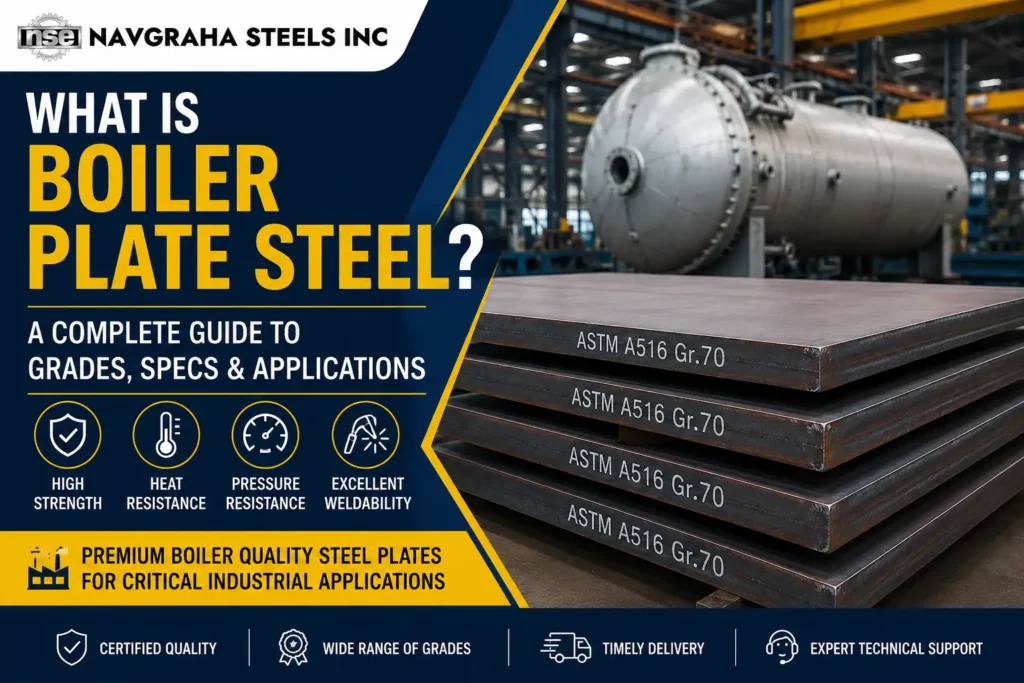
SA 516 Grade 70 is a carbon steel plate designed primarily for pressure vessel and boiler applications operating at moderate and lower temperatures. It is one of the most popular pressure vessel steel grades because of its excellent weldability and toughness.
SA 516 Gr 70 Properties
- High tensile strength
- Excellent notch toughness
- Good weldability
- Suitable for moderate temperature service
- Cost-effective industrial steel plate
Applications of SA 516 Gr 70
- Pressure vessels
- Oil storage tanks
- Boilers
- Heat exchangers
- Chemical processing equipment
What is SA 387 Gr 11 Plate?
SA 387 Grade 11 is a chromium-molybdenum alloy steel plate designed for elevated temperature services. It offers excellent corrosion resistance and heat resistance, making it suitable for refinery and petrochemical applications.
SA 387 Gr 11 Properties
- Excellent heat resistance
- Chromium-moly alloy composition
- Superior oxidation resistance
- High tensile and creep strength
- Good corrosion resistance
Applications of SA 387 Gr 11
- Refinery equipment
- High-temperature pressure vessels
- Petrochemical plants
- Heat exchangers
- Industrial boilers
What is 16Mo3 Plate?
16Mo3 is a European-grade pressure vessel steel plate manufactured according to EN 10028 standards. It contains molybdenum, which improves temperature resistance and mechanical strength.
16Mo3 Plate Properties
- Excellent elevated temperature performance
- High creep resistance
- Good weldability
- Strong thermal resistance
- Durable under pressure conditions
Applications of 16Mo3 Plate
- Power plants
- Industrial boilers
- Pressure vessels
- Steam pipelines
- Heat treatment equipment
SA 516 Gr 70 vs SA 387 Gr 11 vs 16Mo3 Plate Comparison
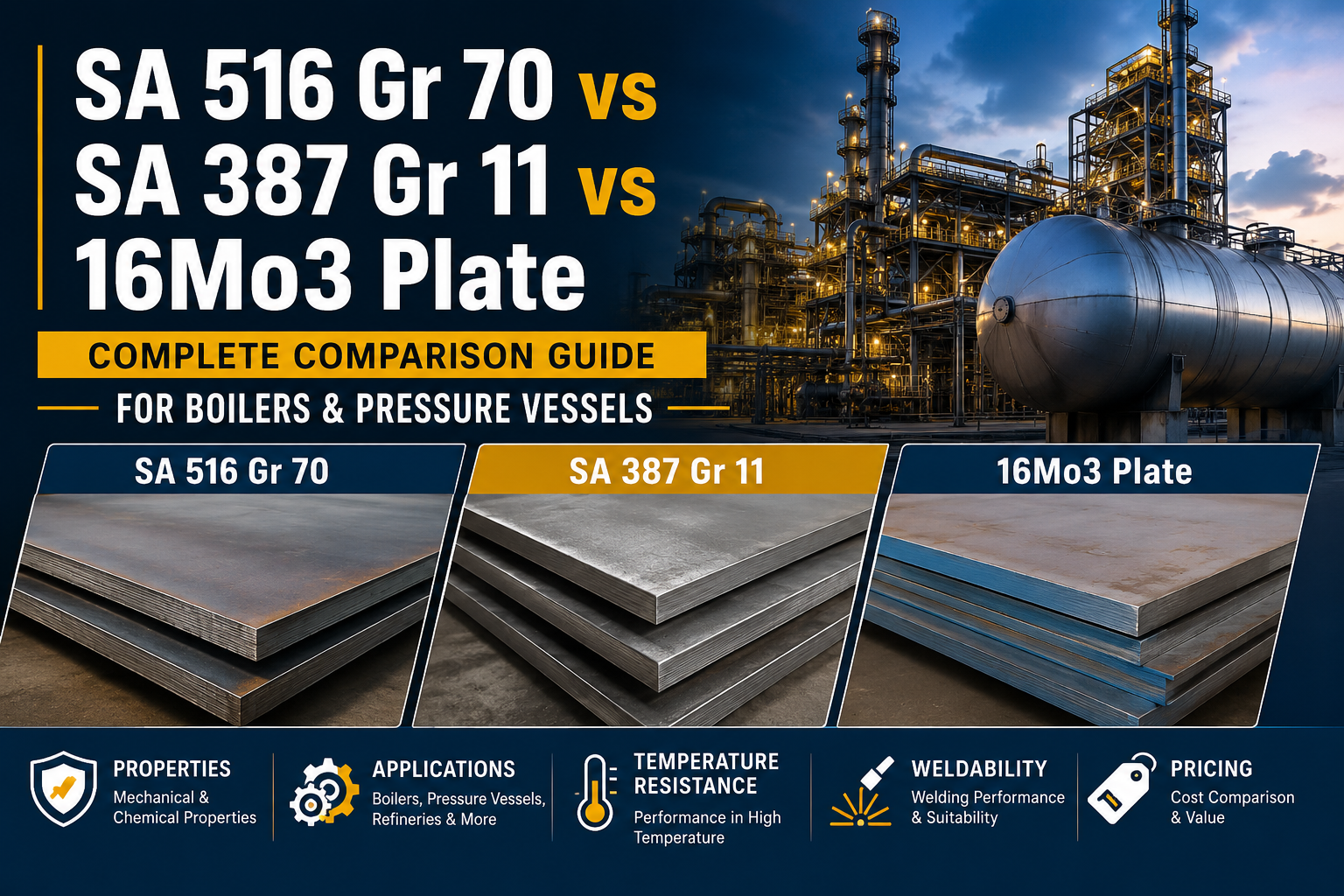
Compare SA 516 Gr 70, SA 387 Gr 11, and 16Mo3 steel plates based on properties, temperature resistance, applications, weldability, and pricing. This guide helps industries choose the right pressure vessel steel grade for boilers, refineries, petrochemical plants, and high-temperature industrial applications.
| Property | SA 516 Gr 70 | SA 387 Gr 11 | 16Mo3 |
| Standard | ASME/ASTM | ASME/ASTM | EN 10028 |
| Material Type | Carbon Steel | Alloy Steel | Low Alloy Steel |
| Temperature Resistance | Moderate | High | High |
| Corrosion Resistance | Moderate | Excellent | Good |
| Weldability | Excellent | Good | Excellent |
| Cost | Lower | Higher | Medium |
| Main Use | Pressure Vessels | High Temp Equipment | Boilers & Power Plants |
Which Steel Plate is Best for Boilers & Pressure Vessels?
Choosing the right steel depends on operating conditions and industry requirements.
Choose SA 516 Gr 70 If:
- Your project requires cost-effective pressure vessel material
- Operating temperatures are moderate
- Excellent weldability is required
Choose SA 387 Gr 11 If:
- Equipment operates under high temperatures
- Corrosion and oxidation resistance are important
- Used in refineries and petrochemical industries
Choose 16Mo3 If:
- You need European standard boiler steel
- High creep resistance is necessary
- Equipment operates continuously at elevated temperatures
Price Comparison of SA 516 Gr 70, SA 387 Gr 11 & 16Mo3
Generally, SA 516 Gr 70 is the most economical option among these three materials. SA 387 Gr 11 is more expensive due to its chromium and molybdenum alloy composition, while 16Mo3 falls within a medium price range.
Factors affecting pricing include:
- Plate thickness
- Material grade
- Heat treatment
- Certification requirements
- Quantity ordered
Conclusion
Understanding the differences between SA 516 Gr 70 vs SA 387 Gr 11 vs 16Mo3 Plate is essential for selecting the correct material for boilers, pressure vessels, and industrial equipment. While SA 516 Gr 70 offers excellent affordability and weldability, SA 387 Gr 11 provides superior high-temperature and corrosion resistance. On the other hand, 16Mo3 is widely preferred for European-standard boiler and pressure vessel applications.
Selecting the right pressure vessel steel grade improves equipment lifespan, safety, and industrial performance. Before finalizing a material, always consider operating temperature, pressure conditions, corrosion exposure, and project budget.
Frequently Asked Questions (FAQs)
1. What is the main difference between SA 516 Gr 70, SA 387 Gr 11, and 16Mo3 plates?
SA 516 Gr 70 is a carbon steel plate mainly used for pressure vessels at moderate temperatures, while SA 387 Gr 11 is a chromium-moly alloy steel designed for high-temperature applications. 16Mo3 is a European-grade pressure vessel steel known for excellent heat resistance and creep strength.
2. Which steel plate is best for boilers and pressure vessels?
The best plate depends on the operating conditions. SA 516 Gr 70 is ideal for general pressure vessel applications, SA 387 Gr 11 is preferred for high-temperature refinery equipment, and 16Mo3 is widely used in European-standard boilers and power plants.
3. What are the key SA 516 Gr 70 properties?
SA 516 Gr 70 offers excellent weldability, high tensile strength, good notch toughness, and reliable performance in pressure vessel applications.
4. What are the major SA 387 Gr 11 properties?
SA 387 Gr 11 provides superior heat resistance, oxidation resistance, corrosion protection, and excellent mechanical strength at elevated temperatures.
5. What are the important 16Mo3 plate properties?
16Mo3 plates have good thermal resistance, excellent creep strength, high-temperature durability, and strong weldability for industrial boiler applications.
6. Which material offers better temperature resistance?
SA 387 Gr 11 generally provides the highest temperature resistance among the three grades, followed by 16Mo3. SA 516 Gr 70 is suitable for moderate-temperature service conditions.
7. Is 16Mo3 equivalent to SA 387 Gr 11?
No, both materials are different grades and standards. 16Mo3 follows European EN standards, while SA 387 Gr 11 follows ASME/ASTM standards and contains higher chromium content for enhanced heat resistance.