

Navgraha Steels INC supports fabrication and procurement enquiries for flat products used in boilers, pressure vessels, tanks and reactors. The appropriate material route depends on equipment type, governing code, pressure, design temperature, medium, corrosion risk, toughness, welding procedure, heat treatment, inspection and documentation. India and export RFQs are reviewed against the confirmed project scope.
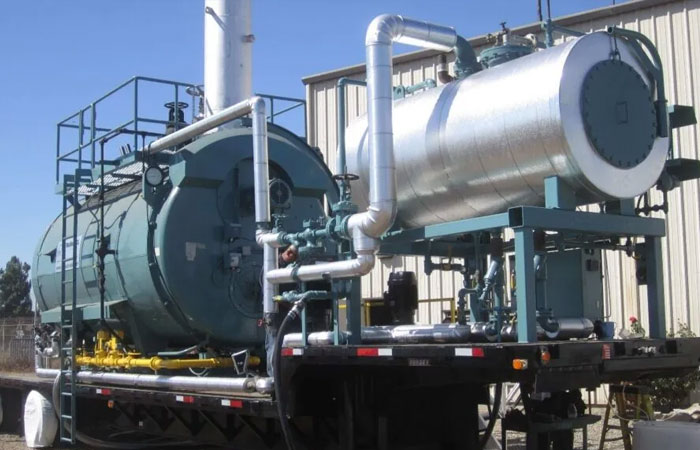
These equipment classes must be separated at the start of material selection. An atmospheric storage tank is designed around contained liquid, corrosion allowance and tank requirements. A pressure vessel retains pressure above atmospheric conditions. A boiler adds fired or heat-recovery duty and steam generation. A reactor can introduce reaction chemistry, hydrogen, catalyst, thermal cycling or hazardous media.
The grade name alone does not establish suitability. The design authority must select and approve the material against the applicable code, temperature, pressure, process medium, fabrication route and project specification. Material supply does not establish compliance for a completed item, welding procedure, design or operating permit.
| Equipment or Service | Main Concern | Material Route to Evaluate | Buyer Must Confirm |
|---|---|---|---|
| Atmospheric storage tanks | Liquid compatibility, corrosion allowance, welding and tank code | Structural or pressure-vessel plate route where the design specifies it | Tank standard, product stored, temperature, corrosion allowance and coating/lining |
| Pressure vessels, separators and drums | Pressure, toughness, weldability and traceability | SA 516 Grade 60 or Grade 70, or another specified pressure-vessel grade | Code, design temperature/pressure, thickness, impact tests and delivery condition |
| Boilers, steam drums and HRSG equipment | Pressure, temperature, thermal cycling and inspection | SA 516 route for suitable service; SA 387 or 16Mo3 route for specified elevated-temperature duty | Applicable boiler code, metal temperature, allowable stress, PWHT and inspection |
| Higher-temperature reactors or process vessels | Creep design, hydrogen, oxidation and heat treatment | SA 387 chrome-moly grades or 16Mo3 where specified | Exact grade, temperature, hydrogen/process conditions, welding and PWHT requirements |
| Sour-service pressure equipment | HIC, hardness, SSC/SOHIC controls and documentation | HIC-tested SA 516 / NACE route where explicitly required | Service standard, test method, acceptance criteria, hardness controls and certificates |
| Corrosive reactors or process equipment | Actual chemistry, concentration, chlorides and localised corrosion | Nickel-alloy route such as Alloy 825, Inconel 625, Monel 400 or Hastelloy where justified | Chemical composition, concentration, temperature, contaminants, aeration and fabrication conditions |
Pressure-vessel plates may be evaluated for vessel shells, heads, columns, separators, knockout drums, heat-exchanger shells and process tanks when the ordered specification supports the component. Thickness, impact temperature, forming and inspection can change the acceptable route.
For boilers, steam drums, waste-heat boilers and HRSG-related equipment, the purchaser should distinguish ordinary pressure-vessel duty from elevated-temperature service. Carbon-steel pressure-vessel plate may suit a defined temperature range, but creep-controlled service can require a specified chrome-moly or molybdenum-bearing route, suitable welding consumables and controlled post-weld heat treatment.
Reactor and process-vessel selection also depends on chemistry. Nickel alloys may be considered for individually assessed corrosive duties; they are not a blanket answer to acids, chlorides, caustics or high-temperature oxidation. Atmospheric tanks need product-specific assessment and should not be treated as pressure vessels solely because they store a process liquid.
Documentation must be requested before quotation. Depending on grade, mill, code and project, the material package may include:
Navgraha Steels INC reviews available Indian and imported sourcing routes against the RFQ's grade, form, dimensions, quantity, documentation and service conditions. The proposed mill, origin, lead time and records are confirmed in the quotation and, where ordered, against the supplied MTC.
Subject to specification and commercial feasibility, supply may include plates, sheets and coils with cut-to-size, profiling, shearing, slitting, edge preparation and agreed traceability marking. Documentation review, inspection coordination, packing, transport and export logistics can be arranged within the accepted scope. Availability, processing, inspection and dispatch are confirmed individually.
For Mumbai, India and export enquiries, provide the delivery city, country or port, required date, Incoterm, packing standard and inspection-release conditions. Freight, preservation, export documents and shipment planning depend on the destination and confirmed commercial terms.
Price and availability vary with grade, code edition, material form, dimensions, quantity, delivery condition, test scope, certification, processing, packing, freight, currency and destination.
Send your material requisition with the equipment type, code, grade, dimensions, quantity, design conditions, tests, certificates, processing, inspection and delivery destination. Navgraha Steels INC will review suitable sourcing and documentation routes against the confirmed requirement.
Request a Quote