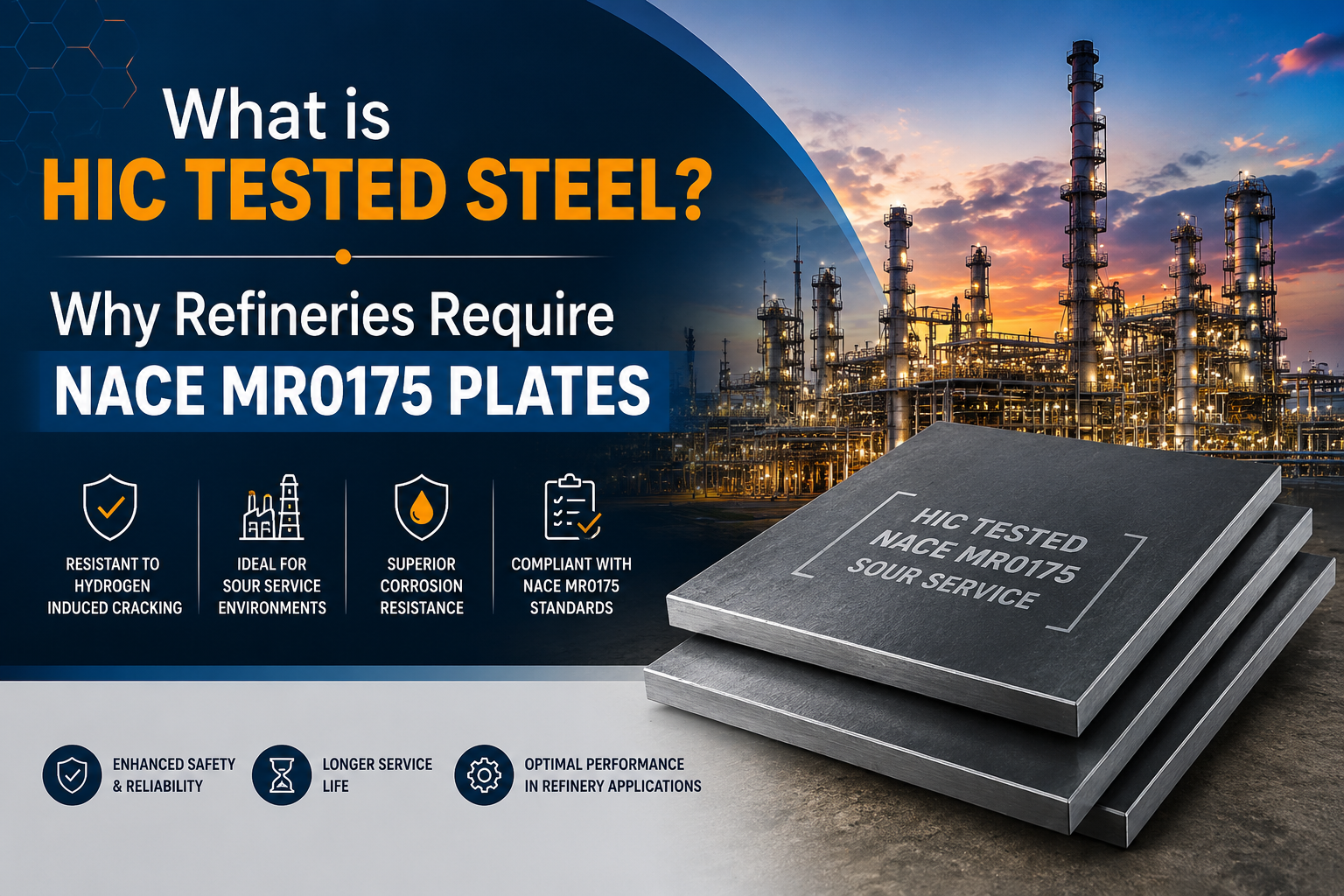
In the oil & gas, petrochemical, and refinery industries, equipment is constantly exposed to corrosive environments containing hydrogen sulfide (H₂S). Standard steel plates can crack and fail under these harsh conditions, leading to serious safety and operational risks. This is why industries rely on HIC Tested Steel and NACE MR0175 material for pressure vessels, storage tanks, and refinery equipment.
This guide explains what is HIC tested steel, how hydrogen induced cracking affects industrial materials, and why refineries require NACE MR0175 compliant steel plates.
What is HIC Tested Steel?
HIC Tested Steel refers to steel plates specifically tested for resistance against Hydrogen Induced Cracking (HIC). These plates are designed for sour service environments where hydrogen sulfide gas is present.
In refinery and petrochemical applications, hydrogen atoms penetrate the steel surface and accumulate inside the material. Over time, this creates internal pressure that leads to cracks and material failure. HIC tested plates are manufactured with controlled chemical composition and low sulfur content to resist this damage.
What is Hydrogen Induced Cracking Steel?
Hydrogen induced cracking steel is specially processed steel that minimizes internal cracking caused by hydrogen exposure. HIC resistant steel plates undergo advanced steelmaking processes to reduce inclusions and impurities that can trap hydrogen.
Causes of Hydrogen Induced Cracking
- Exposure to hydrogen sulfide (H₂S)
- Sour gas environments
- Internal hydrogen accumulation
- High-pressure refinery conditions
- Poor-quality steel with high sulfur content
What is NACE MR0175 Material?
NACE MR0175 material refers to metallic materials suitable for use in environments containing hydrogen sulfide in oil and gas production. The NACE MR0175 standard was developed to prevent sulfide stress cracking and hydrogen-related failures in industrial equipment.
Steel plates compliant with NACE MR0175 offer:
- Resistance to sour gas corrosion
- Improved durability
- Better crack resistance
- Enhanced operational safety
Why Refineries Require NACE MR0175 Plates
Refineries operate under extremely corrosive conditions involving high temperatures, pressure, and sulfur-rich gases. Standard pressure vessel steel may fail in such environments, causing leaks, shutdowns, and safety hazards.
This is why NACE MR0175 plates are widely used in:
- Pressure vessels
- Heat exchangers
- Storage tanks
- Pipelines
- Petrochemical reactors
- Offshore oil platforms
Key Benefits of NACE MR0175 Plates
- High resistance to sulfide stress cracking
- Longer service life
- Reduced maintenance costs
- Improved plant safety
- Suitable for sour service applications
Difference Between Normal Steel and HIC Tested Steel
| Property | Normal Steel | HIC Tested Steel |
| Resistance to Hydrogen Cracking | Low | High |
| Sour Service Suitability | Limited | Excellent |
| Sulfur Content | Higher | Low |
| Refinery Applications | Basic | Advanced |
| NACE Compliance | No | Yes |
Common Grades Available in HIC Tested Plates
Several pressure vessel steel grades are available with HIC and NACE compliance, including:
- SA 516 Gr 70 HIC
- SA 516 Gr 60 NACE MR0175
- API 5L Sour Service Plates
- HIC Resistant Pressure Vessel Plates
These materials are commonly used in refinery, offshore, and oil & gas projects worldwide.
Applications of HIC Tested Steel
Oil & Gas Industry
Used in pipelines, separators, and storage tanks exposed to sour gas.
Petrochemical Plants
Suitable for reactors and pressure vessels operating in corrosive chemical environments.
Refineries
Widely used in desulfurization units, boilers, and heat exchangers.
Offshore Platforms
Provides reliable performance under high-pressure marine conditions.
Advantages of Using HIC Tested Steel
- Excellent crack resistance
- Better corrosion protection
- Improved weldability
- High-pressure durability
- Longer equipment lifespan
- Compliance with international refinery standards
Conclusion
Understanding what is HIC tested steel is essential for industries operating in sour service environments. HIC resistant and NACE MR0175 material provide superior protection against hydrogen-related cracking, ensuring long-term reliability and safety in refineries, petrochemical plants, and offshore applications.
As refinery operations become more demanding, the use of hydrogen induced cracking steel and NACE compliant pressure vessel plates continues to grow across global oil & gas industries. Choosing certified HIC tested steel plates helps reduce operational risks, improve plant performance, and increase equipment lifespan.
Frequently Asked Questions (FAQs)
1. What is HIC tested steel?
HIC tested steel is a specially manufactured steel plate designed to resist hydrogen induced cracking in sour service environments containing hydrogen sulfide (H₂S).
2. What causes hydrogen induced cracking in steel?
Hydrogen induced cracking occurs when hydrogen atoms penetrate the steel surface and create internal cracks due to pressure buildup, especially in refinery and oil & gas applications.
3. What is NACE MR0175 material?
NACE MR0175 material refers to steel and metallic materials approved for use in sour gas environments to prevent sulfide stress cracking and hydrogen-related corrosion failures.
4. Why do refineries use NACE MR0175 plates?
Refineries use NACE MR0175 plates because they provide excellent resistance to corrosion, hydrogen cracking, and sulfide stress cracking in high-pressure sour service environments.
5. What are the applications of HIC tested steel?
HIC tested steel is commonly used in pressure vessels, pipelines, storage tanks, heat exchangers, offshore platforms, and petrochemical equipment.
6. What is the difference between normal steel and HIC tested steel?
Normal steel has limited resistance to hydrogen cracking, while HIC tested steel is manufactured with low sulfur content and tested specifically for sour service applications.
7. Which industries commonly use HIC tested plates?
Industries such as oil & gas, petrochemical, refineries, offshore drilling, and chemical processing commonly use HIC tested and NACE MR0175 compliant steel plates.