Industrial equipment that operates under high temperatures and pressure requires specialized materials capable of delivering consistent performance and long-term reliability. One of the most widely used materials in such applications is boiler plate steel.
Whether used in power plants, refineries, petrochemical facilities, or manufacturing units, boiler quality steel plates play a critical role in ensuring safety, efficiency, and durability. Understanding the grades, specifications, and applications of boiler plates can help engineers, fabricators, and procurement teams make informed purchasing decisions.
In this guide, we’ll explore everything you need to know about boiler plate steel and why it remains one of the most important materials in modern industrial infrastructure.
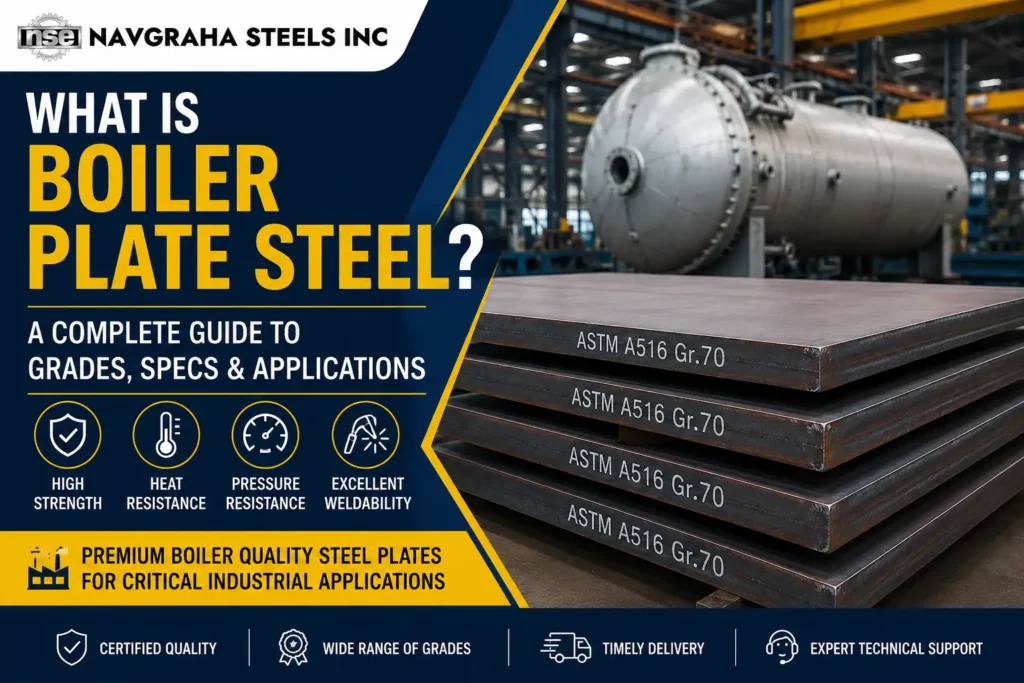
What Is Boiler Plate Steel?
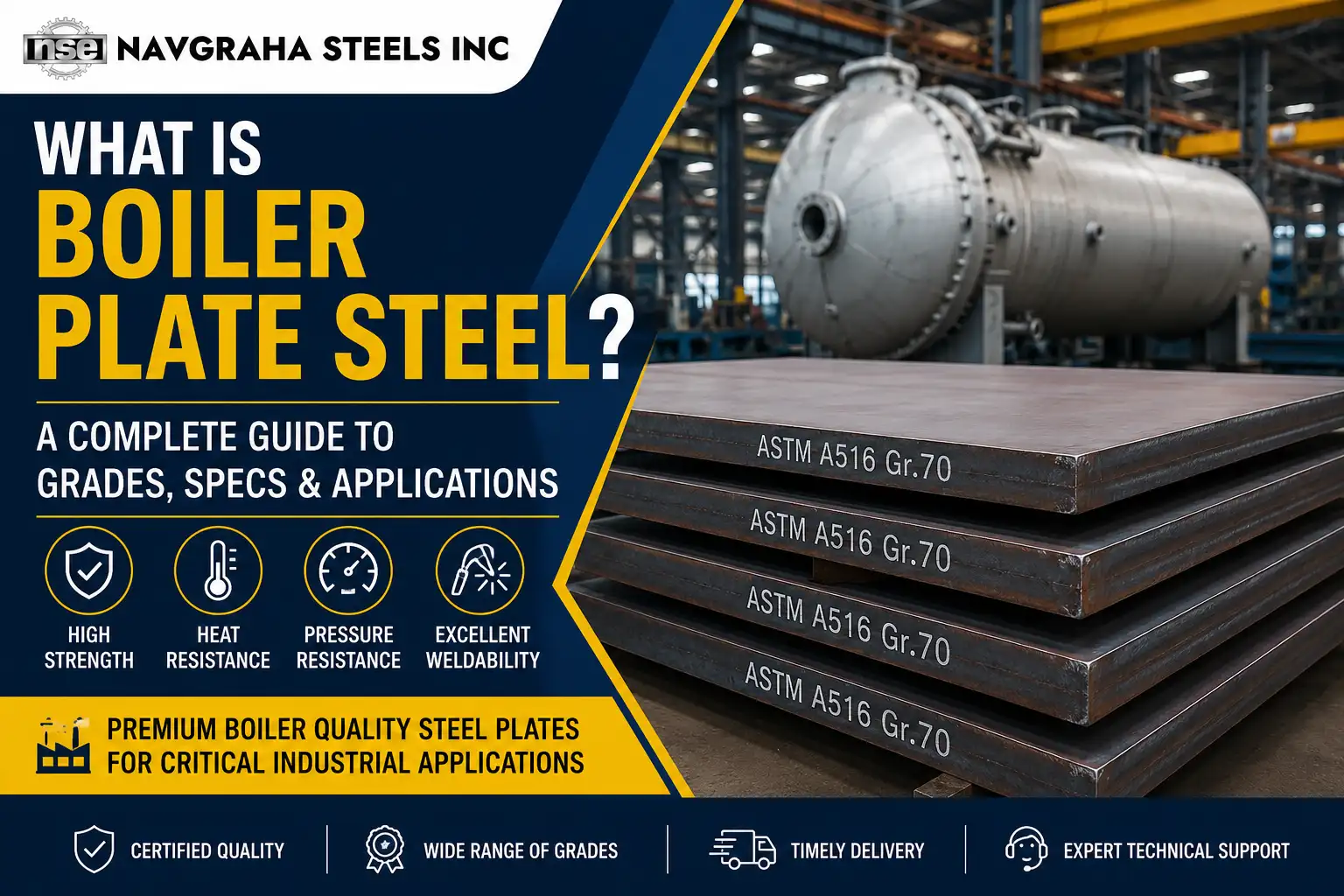
Boiler plate steel refers to a category of steel plates specifically manufactured for high-pressure and high-temperature applications. These plates are commonly used in the fabrication of boilers, pressure vessels, storage tanks, heat exchangers, and industrial reactors.
Unlike standard structural steel, boiler quality plates are designed to withstand continuous exposure to heat, pressure, and mechanical stress without compromising structural integrity.
A high-quality pressure vessel plate must meet strict manufacturing and testing standards to ensure reliable performance in demanding industrial environments.
Key Characteristics of Boiler Quality Steel Plates
Boiler quality steel plates are engineered with properties that make them suitable for critical industrial applications.
High Tensile Strength
These plates provide excellent load-bearing capabilities and can withstand substantial pressure without deformation.
Heat Resistance
Boiler plates maintain their mechanical properties even at elevated temperatures, making them ideal for steam-generating equipment and industrial processing systems.
Excellent Weldability
Fabricators prefer boiler quality steel plates because they offer good weldability, simplifying manufacturing and installation processes.
Toughness and Durability
These materials resist cracking and fatigue, ensuring longer service life even under harsh operating conditions.
Pressure Resistance
One of the most important features of a boiler plate is its ability to safely contain pressure over extended periods.
Common Boiler Plate Grades and Specifications
Different projects require different grades depending on temperature, pressure, and environmental conditions.
ASTM A516 Grade 70
One of the most commonly used pressure vessel steel grades worldwide.
Applications include:
- Boilers
- Pressure vessels
- Storage tanks
- Process equipment
Key benefits:
- Excellent toughness
- Good weldability
- High strength
ASTM A516 Grade 60
Used where moderate strength requirements exist while maintaining good pressure resistance.
ASTM A537
Suitable for pressure vessels requiring higher strength and improved performance under demanding conditions.
EN 10028 Series
European-standard boiler and pressure vessel steels used across international industrial projects.
16Mo3 Plates
Widely used for elevated-temperature service applications in power generation and petrochemical industries.
Difference Between Boiler Plates and Standard Carbon Steel Plates
Many buyers assume all steel plates perform similarly, but there are significant differences.
| Feature | Boiler Plate Steel | Standard Carbon Steel |
| Pressure Resistance | High | Moderate |
| Heat Resistance | Excellent | Limited |
| Certification Requirements | Strict | Standard |
| Pressure Vessel Use | Suitable | Not Recommended |
| High Temperature Service | Designed For It | Limited Capability |
For pressure vessels and boilers, standard carbon steel often cannot provide the required performance or regulatory compliance.
Major Industrial Applications of Boiler Plate
Power Generation Plants
Boiler plates are extensively used in:
- Steam boilers
- Heat recovery systems
- Pressure vessels
- Thermal power plant equipment
Oil & Gas Industry
Refineries and processing facilities utilize boiler quality plates for:
- Pressure vessels
- Separators
- Storage tanks
- Heat exchangers
Petrochemical Plants
Chemical processing environments require steel capable of handling pressure and elevated temperatures.
Heavy Engineering
Industrial machinery manufacturers use boiler quality plates in fabricated equipment and structural components.
Marine and Shipbuilding
Pressure-containing equipment onboard ships frequently relies on certified boiler quality steel plates.
How to Choose the Right Boiler Plate for Your Project
Selecting the right material requires evaluating multiple factors.
Understand Operating Conditions
Consider:
- Working temperature
- Internal pressure
- Environmental exposure
- Corrosion risks
Verify Material Standards
Always ensure compliance with:
- ASTM Standards
- ASME Standards
- EN Standards
Assess Fabrication Requirements
Consider weldability, machinability, and forming characteristics before selecting a grade.
Work with a Trusted Supplier
Reliable suppliers provide:
- Mill test certificates
- Traceability documentation
- Quality assurance
- Technical support
Common Mistakes to Avoid When Selecting Boiler Plates
Choosing Based on Price Alone
Lower-cost materials may not meet the required specifications, potentially leading to operational failures.
Ignoring Certification Requirements
Industrial projects often require certified materials for compliance and safety purposes.
Selecting Incorrect Grades
Using the wrong grade can reduce equipment lifespan and increase maintenance costs.
Overlooking Future Operating Conditions
Projects may expand or experience changing conditions that demand higher-performing materials.
Why Indian Industries Prefer Certified Boiler Quality Plates
India’s industrial sector continues to grow rapidly across power generation, manufacturing, infrastructure, and petrochemicals.
Certified boiler quality steel plates offer:
- Regulatory compliance
- Reliable performance
- Enhanced safety
- Lower lifecycle costs
- Greater operational efficiency
This is why EPC contractors and fabricators increasingly prioritize certified pressure vessel materials for critical projects.
Choosing a Reliable Boiler Plate Supplier
A trusted supplier should offer:
✔ Certified material documentation
✔ Multiple grade availability
✔ Fast delivery schedules
✔ Technical consultation
✔ Custom cutting options
✔ Competitive pricing
Working with an experienced supplier helps ensure material consistency and project success.
For organizations seeking high-quality industrial steel solutions, Navgraha Steels Inc supplies boiler quality plates, pressure vessel steel plates, alloy steel plates, and specialized industrial steel products for demanding applications.
Conclusion
Boiler plate steel remains one of the most important materials used in industrial pressure and temperature applications. Its unique combination of strength, toughness, heat resistance, and pressure-handling capability makes it essential for boilers, pressure vessels, power plants, petrochemical facilities, and heavy engineering projects.
Understanding boiler plate grades, specifications, and application requirements can help project teams select the most suitable material while improving safety, efficiency, and long-term operational performance.
Looking for high-quality boiler plate, boiler quality steel plates, or pressure vessel plate solutions for your next project?
Contact Navgraha Steels Inc today to discuss your requirements and receive expert guidance on selecting the right industrial steel plates for your application.
Frequently Asked Questions
What is boiler plate steel used for?
Boiler plate steel is primarily used for boilers, pressure vessels, heat exchangers, storage tanks, and high-temperature industrial equipment.
What is the most common boiler plate grade?
ASTM A516 Grade 70 is among the most widely used boiler and pressure vessel steel grades globally.
Are boiler quality plates suitable for pressure vessels?
Yes. Boiler quality plates are specifically manufactured for pressure-containing applications and are widely used in pressure vessel fabrication.
How are boiler quality steel plates different from carbon steel plates?
Boiler plates offer superior heat resistance, pressure resistance, toughness, and certification compliance compared to standard carbon steel plates.
Why are certified pressure vessel plates important?
Certified plates ensure compliance with industry standards and help maintain safety and performance in critical industrial applications.