

Navgraha Steels INC supports shipyard, marine-fabrication, equipment-builder and procurement enquiries for carbon steel, pressure-vessel steel and selected nickel-alloy flat products. The correct material depends on the component, vessel type, operating medium, temperature, corrosion exposure, design rules, welding route and classification or project requirements. India and export enquiries are reviewed against the complete RFQ.
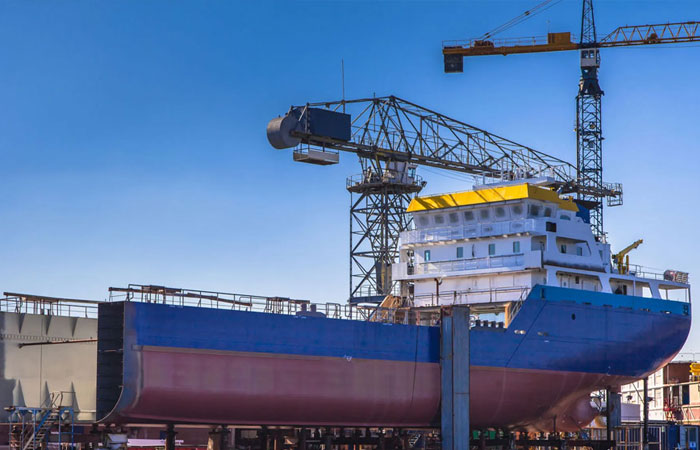
Marine projects can involve hull and deck structures, modules, boilers, pressure vessels, tanks, heat exchangers, desalination equipment and fabrication supports. Requirements differ between vessels, offshore equipment, repair work and marine-process systems.
Material selection must consider external atmosphere, splash-zone or immersion exposure, seawater chemistry, chlorides, galvanic interaction, crevices, coating system, fatigue, vibration, low-temperature service, welding procedures and access for inspection. A steel grade that is suitable for a general fabricated structure is not automatically suitable for hull plating, seawater equipment, pressure equipment or class-controlled work.
| Equipment or Service | Main Concern | Material Route to Evaluate | Buyer Must Confirm |
|---|---|---|---|
| General supports, modules and non-pressure fabrication | Structural loads, welding and coating | ASTM A36 or S275JR where suitable | Project design, coating, fatigue and marine approval requirements |
| Onboard boilers, tanks and pressure equipment | Pressure, toughness and welding | SA 516 Grade 60 or Grade 70 where specified | Governing code, service, thickness, condition and certification |
| Higher-temperature marine process equipment | Temperature, PWHT and creep design | SA 387 grades or 16Mo3 where specified | Metal temperature, code, heat treatment and inspection |
| Desalination, seawater or corrosion-sensitive equipment | Medium, chlorides and localised corrosion | Monel 400, Inconel 625, Alloy 825 or Hastelloy routes where justified | Actual medium, temperature, velocity, geometry and project approval |
| Sour-service marine process equipment | HIC, hardness and sour-service controls | SA 516 Grade 70 HIC or NACE pathway where specified | Exact standard, test method, acceptance criteria and documents |
Structural carbon steel may be considered for specified marine fabrication, modules, platforms, supports and general engineering assemblies where the design, coating system, corrosion allowance and approval route support its use. Marine exposure cannot be addressed by grade name alone.
SA 516 grades may be evaluated for approved onboard boilers, pressure vessels, tanks, separators and heat-exchanger shells where the required code and service conditions support them. Pressure-vessel certification, impact requirements, testing and traceability must be defined by the project.
Nickel-alloy routes may be evaluated for selected seawater, desalination, heat-exchanger, pump, valve, pollution-control or corrosive marine-process requirements. The choice depends on medium chemistry, chlorides, temperature, oxygen content, flow velocity, stagnation, crevices, fabrication and equipment design. No listed alloy should be described as universally seawater-resistant.
Marine and shipbuilding projects may require documentation beyond a standard MTC. The buyer must state the requirement in the RFQ before ordering.
Navgraha Steels INC reviews stock and Indian or imported sourcing options against grade, form, dimensions, quantity, documents and project conditions. The actual mill, origin and supporting material records are confirmed in the offer and against the MTC.
Subject to specification and commercial feasibility, support may include plate, sheet and coil supply; cut-to-size, profiling, shearing, slitting, edge preparation, agreed marking and traceability. Documentation review, TPI coordination, transport, export logistics, packing and shipping documents can be arranged within the accepted scope.
Small, bulk and project enquiries are reviewed subject to availability and mill programme. Urgent dispatch requires confirmed material, documents, processing, payment and destination.
For Mumbai, India and export orders, send the delivery city, country or port, quantity, required date, Incoterm, packing requirement and inspection-release conditions. Freight mode, preservation, export documents and shipment planning depend on the confirmed order and destination requirements.
Marine-material pricing depends on grade, governing specification, product form, dimensions, quantity, delivery condition, approved mill or origin, testing, certification, processing, packing, freight, currency and destination.
Send your material requisition, vessel or equipment name, design rule, grade, dimensions, quantity, medium, tests, class or inspection requirements, approved-mill requirement and destination. Navgraha Steels INC will review material routes, sourcing options, documentation, processing and commercial terms.
Request a Quote