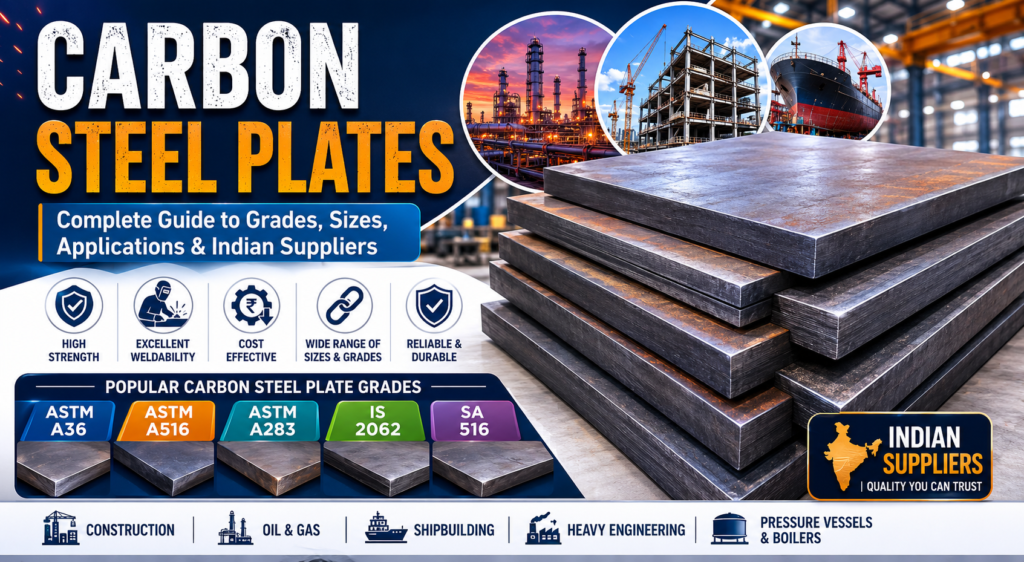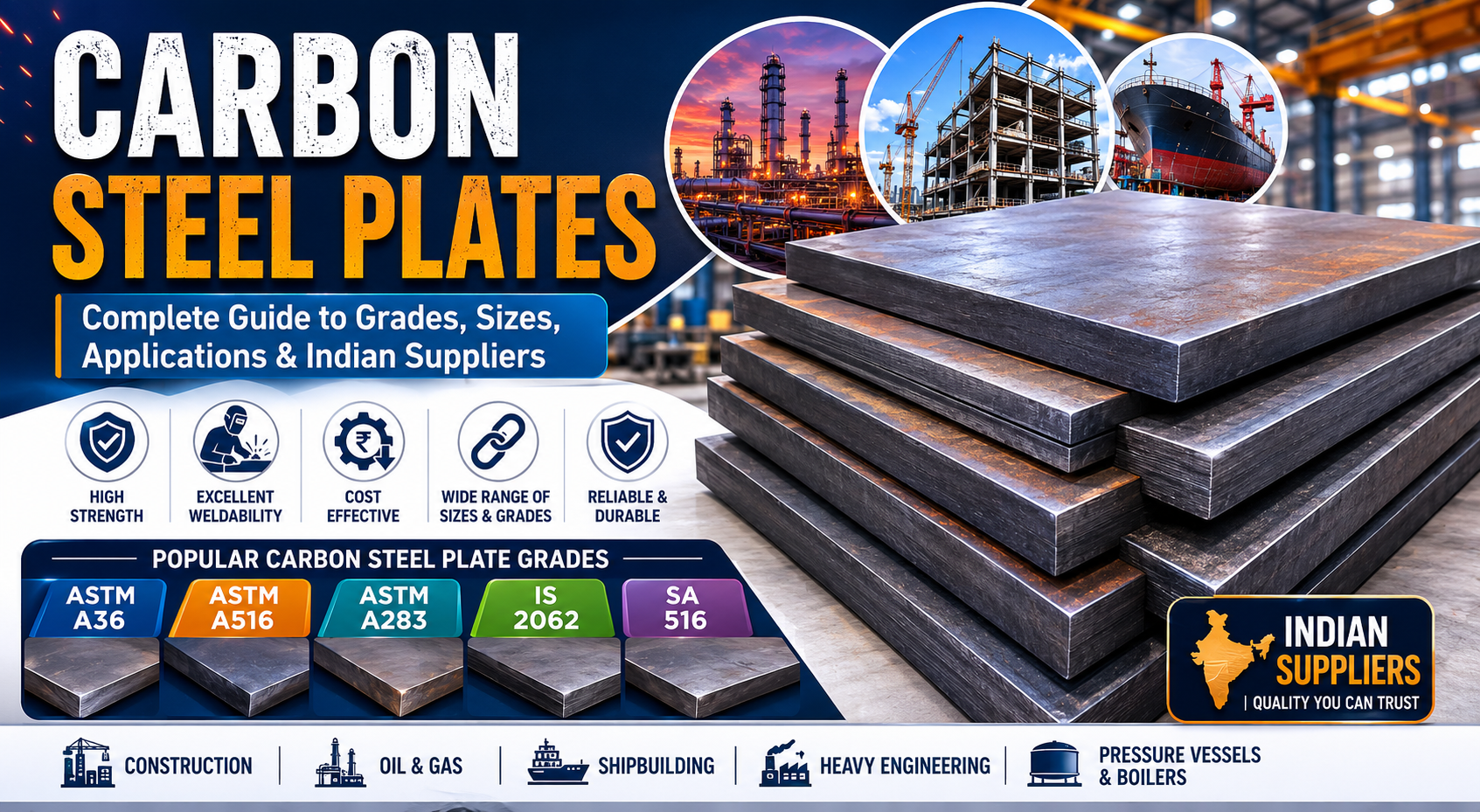
Carbon steel plates are among the most widely used industrial steel products across sectors such as construction, oil & gas, manufacturing, shipbuilding, infrastructure, pressure vessel fabrication, and heavy engineering. Their strength, durability, affordability, and versatility make them a preferred material for structural and industrial applications.
Industries rely on carbon plate steel for manufacturing equipment that requires high strength and long-term performance under demanding conditions. These steel plates are available in various thicknesses, grades, and specifications to meet different industrial requirements.
Understanding the different carbon steel plate grades, sizes, applications, and quality standards is important before selecting the right material for a project. Choosing the correct plate ensures better fabrication performance, structural integrity, corrosion resistance, and operational reliability.
This guide explains everything about carbon steel plates, including their types, industrial uses, dimensions, benefits, and how to choose a reliable carbon steel plate supplier in India.
What Are Carbon Steel Plates?
Understanding Carbon Plate Steel
Carbon steel plates are flat steel products manufactured primarily using iron and carbon. The carbon content determines the strength, hardness, weldability, and machinability of the material.
Compared to stainless steel or alloy steel, carbon plate steel is more economical while still offering excellent mechanical strength and durability for industrial use.
Carbon steel plates are widely used because they provide:
- High tensile strength
- Good weldability
- Excellent machinability
- Structural stability
- Cost-effective performance
Types of Carbon Steel Plates
Low Carbon Steel Plates
Low carbon steel contains a smaller percentage of carbon, making it easier to weld and fabricate. These plates are commonly used in structural and general engineering applications.
Applications include:
- Structural fabrication
- Industrial buildings
- Mild steel components
- Storage tanks
Medium Carbon Steel Plates
Medium carbon steel offers improved strength and hardness compared to low carbon steel.
These plates are commonly used for:
- Machinery components
- Industrial equipment
- Automotive applications
- Heavy engineering structures
High Carbon Steel Plates
High carbon steel plates contain higher carbon content, providing greater hardness and wear resistance.
Common applications include:
- Cutting tools
- Heavy machinery
- Wear-resistant applications
- Industrial tools
Common Carbon Steel Plate Grades
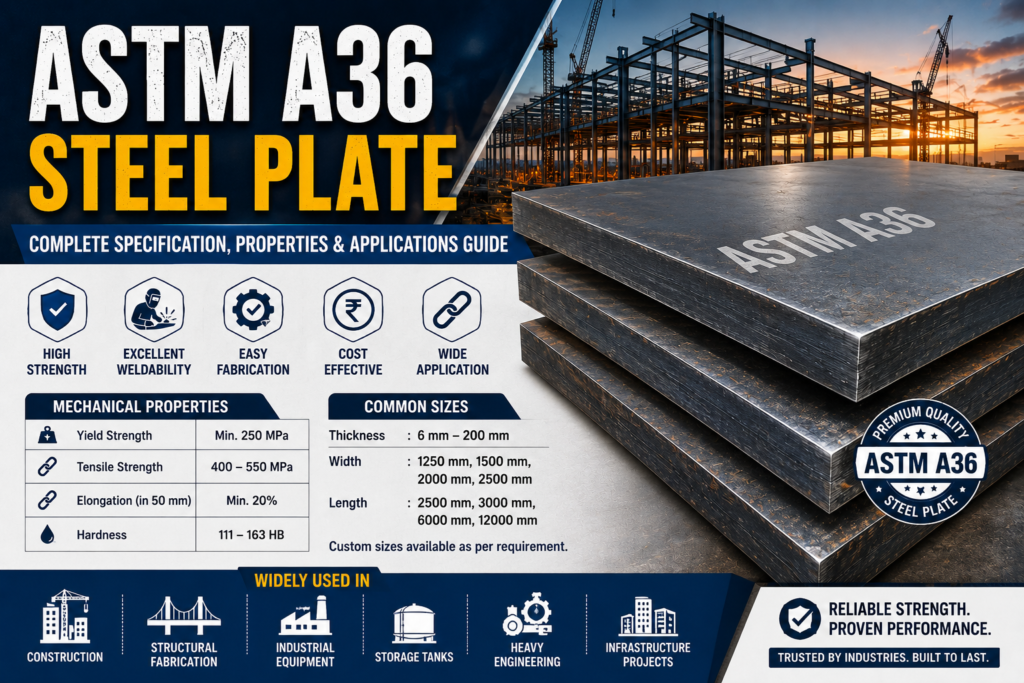
ASTM A36 Carbon Steel Plates
ASTM A36 is one of the most widely used carbon steel plate grades for structural applications. It offers excellent weldability and good mechanical strength.
Applications include:
- Structural steel fabrication
- Bridges
- Industrial structures
- Construction projects
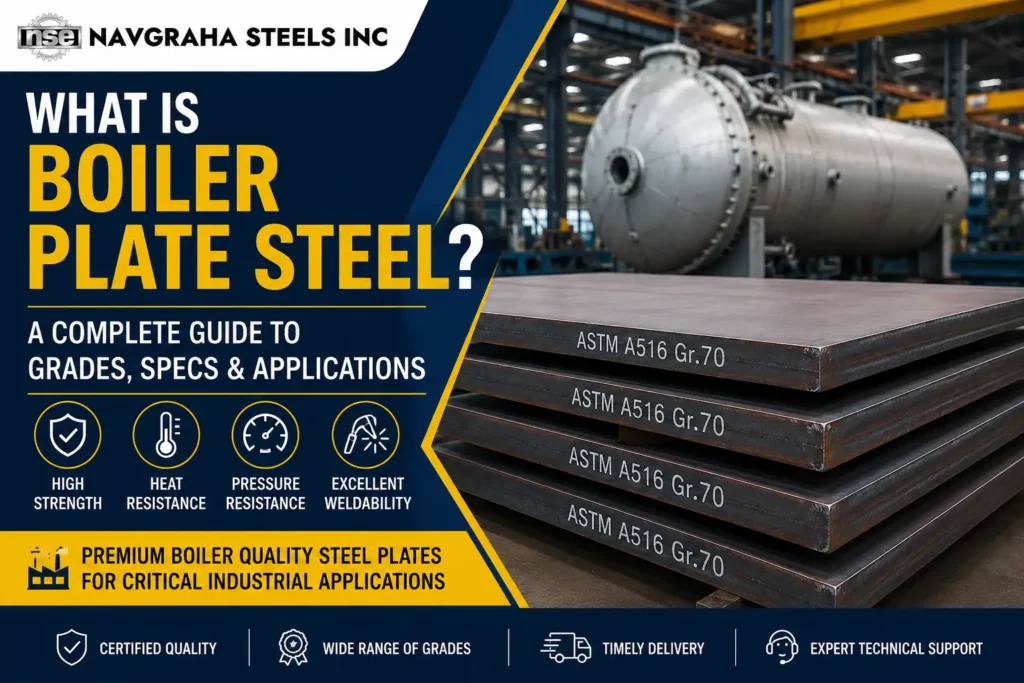
ASTM A516 Carbon Steel Plates
ASTM A516 plates are mainly used for pressure vessel and boiler applications.
Key features include:
- Good notch toughness
- Excellent weldability
- Pressure resistance
- Moderate temperature performance
ASTM A283 Carbon Steel Plates
ASTM A283 plates are commonly used in low and moderate-strength structural applications.
Industries use these plates for:
- Storage tanks
- General fabrication
- Structural components
IS 2062 Carbon Steel Plates
IS 2062 is a popular Indian standard for structural steel plates used across infrastructure and engineering projects.
These plates are preferred because of:
- Good strength
- Easy fabrication
- Cost-effectiveness
- Wide availability in India
Width and Length Options
Standard width and length options include:
- 1250 mm
- 1500 mm
- 2000 mm
- 2500 mm
Custom dimensions are also available depending on project requirements.
Applications of Carbon Steel Plates
Construction Industry
The construction industry extensively uses carbon steel plates for structural frameworks, industrial sheds, bridges, and commercial buildings because of their strength and durability.
Oil & Gas Industry
Carbon plate steel is widely used in pipelines, storage tanks, pressure vessels, and refinery equipment.
The material provides:
- Pressure resistance
- Structural reliability
- Fabrication flexibility
Shipbuilding Industry
Marine and shipbuilding industries use carbon steel plates for:
- Ship hulls
- Offshore structures
- Marine storage tanks
- Structural fabrication
Heavy Engineering
Industrial machinery and engineering equipment require high-strength carbon steel plate grades capable of handling heavy loads and harsh conditions.
Pressure Vessel Manufacturing
Grades such as ASTM A516 are commonly used in pressure vessel and boiler manufacturing applications.
Advantages of Carbon Steel Plates
High Strength
Carbon steel plates provide excellent mechanical strength for industrial and structural applications.
Easy Fabrication
The material is easy to cut, bend, machine, and weld, making fabrication more efficient.
Cost-Effective Solution
Compared to alloy and stainless steel, carbon plate steel offers better affordability for large industrial projects.
Wide Availability
Carbon steel plates are readily available in multiple grades and sizes across the Indian market.
How to Select the Right Carbon Steel Plate Grade
Check Application Requirements
Different applications require different mechanical properties and performance standards.
For example:
- A36 for structural applications
- A516 for pressure vessels
- IS 2062 for infrastructure projects
Evaluate Strength Requirements
Higher-load applications require stronger carbon steel plate grades with better tensile and yield strength.
Consider Weldability
If extensive welding is required, choose plates with good fabrication and weldability properties.
Verify Industry Standards
Always ensure the material complies with ASTM, ASME, or IS standards.
Practical Tips Before Buying Carbon Steel Plates
Choose Certified Material
Always purchase plates with proper mill test certificates and quality documentation.
Verify Dimensions Carefully
Check plate thickness, width, and tolerances before procurement.
Work With Reliable Suppliers
Selecting an experienced carbon steel plate supplier ensures better product quality and timely delivery.
Compare Multiple Grades
Do not select a material based only on price. Compare strength, application suitability, and durability.
Common Mistakes to Avoid
Ignoring Plate Grade Specifications
Using the wrong grade can affect structural performance and safety.
Choosing Material Only Based on Cost
Low-cost plates may not meet industrial quality standards.
Overlooking Corrosion Conditions
Certain environments may require coated or treated plates for better durability.
Not Checking Testing Reports
Always review testing certifications before finalizing material procurement.
Carbon Steel Plate Market in India
India is one of the leading markets for carbon steel plates because of rapid industrial growth, infrastructure development, shipbuilding, and energy sector expansion.
Major industries in Mumbai, Gujarat, Chennai, Kolkata, and Visakhapatnam rely heavily on certified carbon steel plate suppliers for industrial fabrication and engineering projects.
Indian manufacturers and suppliers provide a wide range of ASTM, ASME, and IS standard carbon steel plates suitable for domestic and export markets.
The increasing demand for industrial infrastructure and manufacturing continues to drive the growth of the carbon steel plate industry in India.
Conclusion
Carbon steel plates remain one of the most important industrial materials because of their strength, versatility, affordability, and fabrication ease. Industries across construction, oil & gas, shipbuilding, heavy engineering, and manufacturing rely heavily on quality carbon plate steel for reliable structural and industrial performance.
Understanding different carbon steel plate grades, dimensions, applications, and quality standards helps industries select the right material for specific operational requirements.
Whether you need structural steel plates, pressure vessel plates, or heavy engineering materials, working with a trusted carbon steel plate supplier ensures better product quality, durability, and long-term project performance.
Frequently Asked Questions
What are carbon steel plates used for?
Carbon steel plates are used in construction, pressure vessels, shipbuilding, industrial fabrication, storage tanks, and heavy engineering applications.
Which is the most common carbon steel plate grade?
ASTM A36 and IS 2062 are among the most commonly used carbon steel plate grades for structural applications.
What is the difference between carbon steel and stainless steel?
Carbon steel primarily contains iron and carbon, while stainless steel contains chromium for improved corrosion resistance.
Are carbon steel plates suitable for pressure vessels?
Yes, grades such as ASTM A516 are specifically designed for pressure vessel applications.
How do I choose the right carbon steel plate supplier?
Choose suppliers who provide certified materials, testing reports, proper documentation, and consistent product quality.