Corrosion is one of the biggest challenges in chemical processing plants, offshore platforms, marine equipment, and refinery industries. Continuous exposure to chemicals, saltwater, acids, and extreme temperatures can damage ordinary metals and reduce equipment lifespan. This is why industries rely on high-performance corrosion resistant alloys for critical applications.
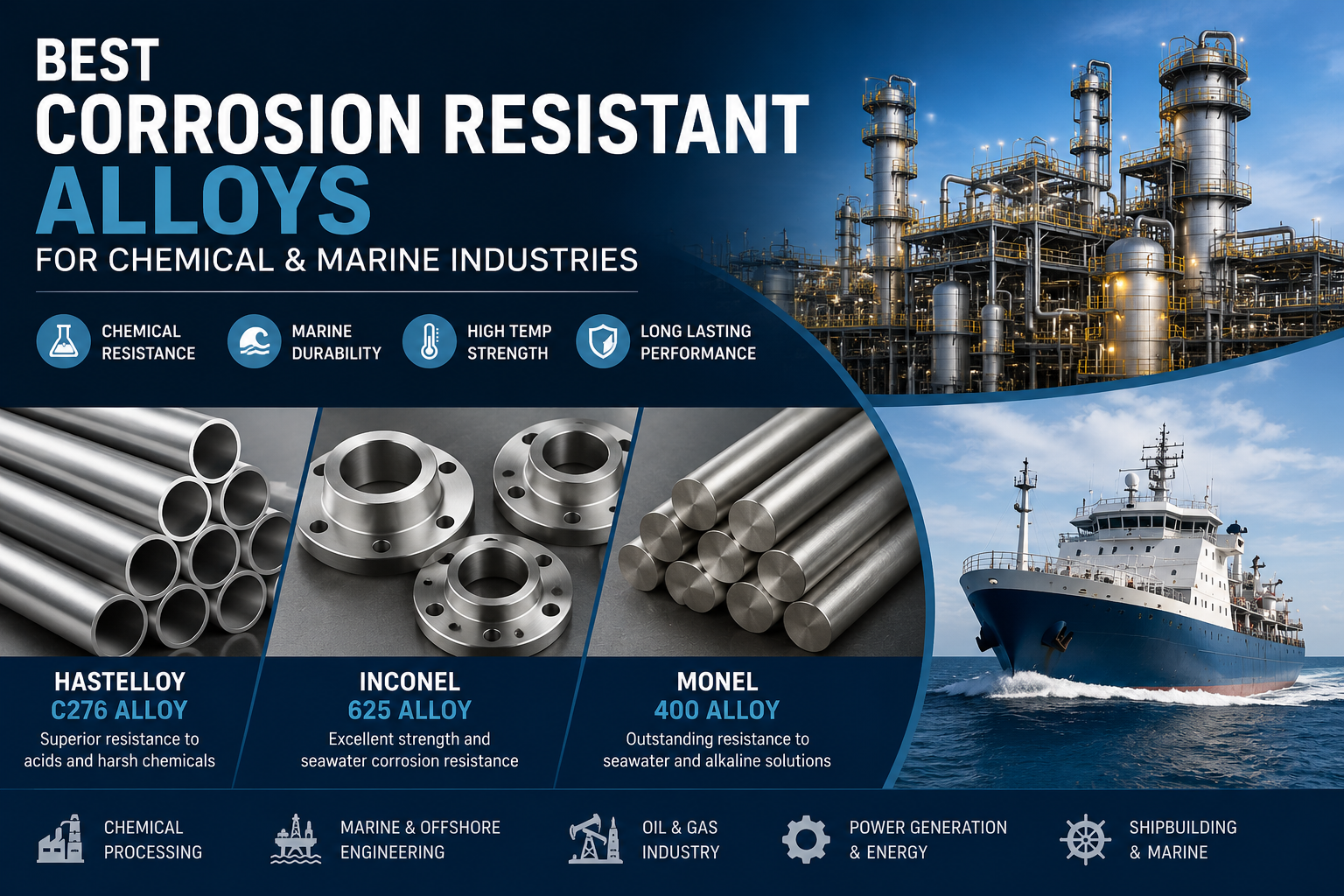
Among the most widely used materials are Hastelloy C276 alloy, Inconel 625 alloy, and Monel 400 alloy. These alloys offer exceptional resistance against corrosion, oxidation, chemical attack, and seawater damage.
In this guide, we explore the best corrosion resistant alloys for chemical and marine industries, their properties, applications, and benefits.
What are Corrosion Resistant Alloys?
Corrosion resistant alloys are specially engineered metal alloys designed to withstand harsh environments such as acids, seawater, chemicals, and high temperatures. These alloys contain elements like nickel, chromium, molybdenum, and copper, which improve corrosion resistance and durability.
Benefits of Corrosion Resistant Alloys
- Excellent resistance to rust and oxidation
- Long service life
- High temperature strength
- Protection against chemical attack
- Reduced maintenance costs
- Improved industrial safety
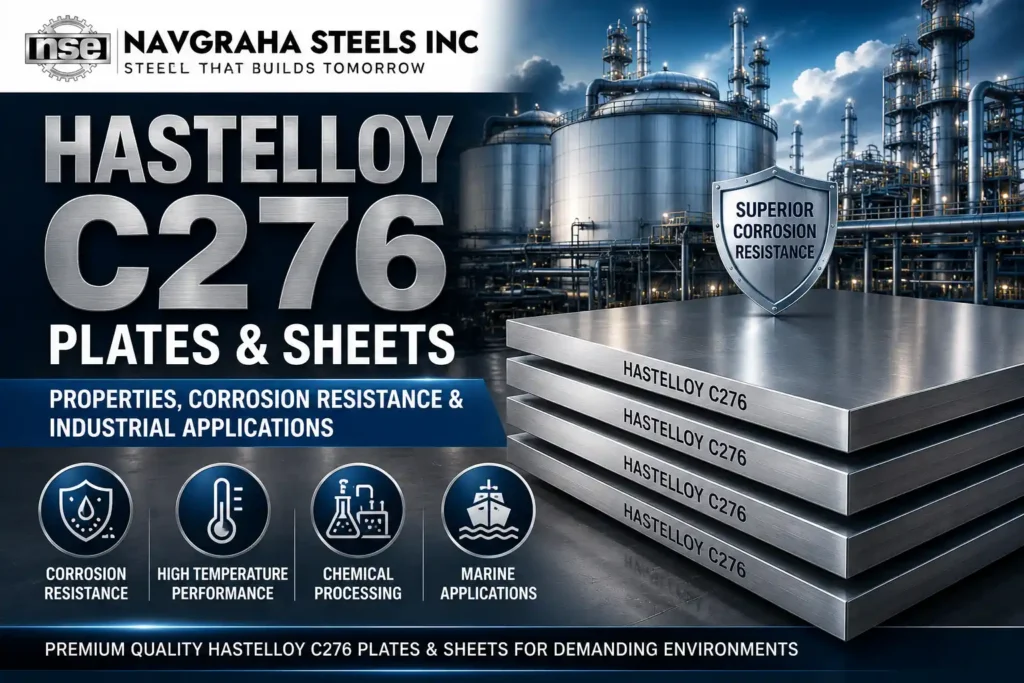
Hastelloy C276 Alloy
What is Hastelloy C276 Alloy?
Hastelloy C276 alloy is a nickel-molybdenum-chromium superalloy known for outstanding corrosion resistance in aggressive chemical environments. It performs exceptionally well in oxidizing and reducing conditions.
Key Properties of Hastelloy C276 Alloy
- Superior resistance to pitting and crevice corrosion
- Excellent resistance to sulfuric and hydrochloric acids
- High-temperature performance
- Good weldability
- Resistance to chloride-induced corrosion
Applications of Hastelloy C276 Alloy
- Chemical processing plants
- Pollution control systems
- Marine engineering
- Heat exchangers
- Petrochemical equipment
Inconel 625 Alloy
What is Inconel 625 Alloy?
Inconel 625 alloy is a nickel-chromium-molybdenum alloy widely used in marine and aerospace industries because of its excellent strength and corrosion resistance.
Key Properties of Inconel 625 Alloy
- Outstanding seawater corrosion resistance
- High mechanical strength
- Excellent oxidation resistance
- Suitable for high-temperature applications
- Strong fatigue resistance
Applications of Inconel 625 Alloy
- Offshore platforms
- Marine exhaust systems
- Aerospace components
- Nuclear reactors
- Heat exchangers
Monel 400 Alloy
What is Monel 400 Alloy?
Monel 400 alloy is a nickel-copper alloy highly resistant to seawater corrosion, hydrofluoric acid, and alkaline solutions. It is commonly used in marine engineering and chemical processing industries.
Key Properties of Monel 400 Alloy
- Excellent seawater resistance
- High toughness
- Good thermal conductivity
- Resistance to alkaline chemicals
- Strong mechanical performance
Applications of Monel 400 Alloy
- Marine shafts and pumps
- Chemical equipment
- Valves and fasteners
- Heat exchangers
- Offshore engineering
Comparison of Corrosion Resistant Alloys
| Alloy | Main Composition | Best Feature | Common Industry |
| Hastelloy C276 | Nickel-Moly-Chromium | Acid Resistance | Chemical Processing |
| Inconel 625 | Nickel-Chromium | High Temperature Strength | Marine & Aerospace |
| Monel 400 | Nickel-Copper | Seawater Resistance | Marine Engineering |
Which Corrosion Resistant Alloy is Best?
The best alloy depends on the operating environment and industrial requirements.
Choose Hastelloy C276 Alloy If:
- Equipment handles strong acids
- Chemical corrosion resistance is critical
- High-temperature chemical processing is involved
Choose Inconel 625 Alloy If:
- Applications require high strength
- Equipment operates in marine environments
- High-temperature oxidation resistance is necessary
Choose Monel 400 Alloy If:
- Seawater exposure is continuous
- Marine corrosion resistance is required
- Applications involve alkaline solutions
Industries Using Corrosion Resistant Alloys
Chemical Industry
Used in reactors, storage tanks, piping systems, and chemical handling equipment.
Marine Industry
Applied in offshore platforms, seawater pipelines, marine fasteners, and shipbuilding.
Oil & Gas Industry
Suitable for refinery equipment, pressure vessels, and offshore drilling systems.
Power Plants
Used in heat exchangers, boilers, and high-temperature systems.
Advantages of Corrosion Resistant Alloys
- Longer equipment lifespan
- Lower maintenance costs
- Better operational safety
- Resistance to harsh chemicals
- Improved high-temperature performance
- Reliable performance in seawater environments
Conclusion
Selecting the right corrosion resistant alloys is essential for industries exposed to harsh chemicals, seawater, and high temperatures. Materials like Hastelloy C276 alloy, Inconel 625 alloy, and Monel 400 alloy provide superior corrosion protection, durability, and long-term industrial performance.
Whether for chemical plants, offshore projects, or marine engineering, choosing the correct alloy improves equipment reliability, reduces operational risks, and increases overall efficiency.
Frequently Asked Questions (FAQs)
1. What are corrosion resistant alloys?
Corrosion resistant alloys are metal alloys specially designed to resist rust, chemical attack, seawater corrosion, and oxidation in harsh industrial environments.
2. What is Hastelloy C276 alloy used for?
Hastelloy C276 alloy is mainly used in chemical processing plants, pollution control systems, heat exchangers, and marine applications because of its excellent acid resistance.
3. Why is Inconel 625 alloy preferred in marine industries?
Inconel 625 alloy offers excellent seawater corrosion resistance, high strength, and oxidation resistance, making it ideal for offshore and marine environments.
4. What are the advantages of Monel 400 alloy?
Monel 400 alloy provides outstanding seawater resistance, high toughness, excellent corrosion resistance, and good thermal conductivity.
5. Which alloy is best for seawater applications?
Monel 400 and Inconel 625 are among the best alloys for seawater applications due to their superior marine corrosion resistance.
6. Are corrosion resistant alloys suitable for high temperatures?
Yes, alloys like Hastelloy C276 and Inconel 625 perform exceptionally well in high-temperature industrial applications.
7. Which industries use corrosion resistant alloys?
Chemical processing, marine engineering, oil & gas, petrochemical, power generation, and offshore industries widely use corrosion resistant alloys.