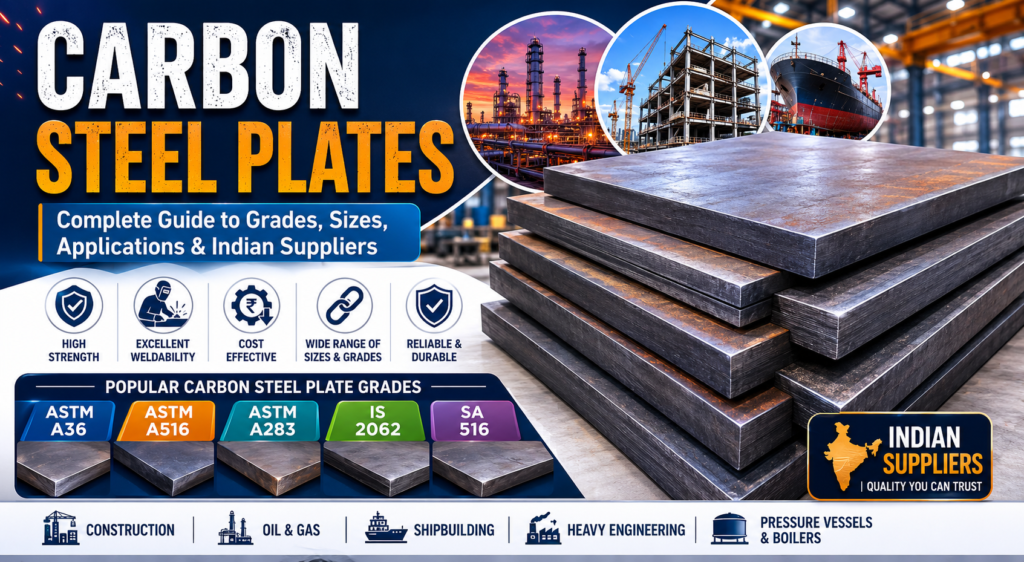
ASTM A36 steel plate is one of the most widely used carbon steel materials in structural and industrial applications. Known for its excellent strength, weldability, affordability, and fabrication ease, A36 steel is commonly used in construction, heavy engineering, manufacturing, industrial fabrication, and infrastructure projects.
Because of its balanced mechanical properties, A36 steel plate is considered a reliable material for structural applications requiring durability and cost-effective performance. Industries prefer this material for projects that involve welding, machining, forming, and cutting operations.
The material is manufactured according to ASTM standards, ensuring consistent quality and dependable performance across industrial applications. Whether used in bridges, buildings, industrial structures, storage tanks, or machinery fabrication, A36 carbon steel plate offers versatility and reliability for a wide range of engineering requirements.
This guide explains everything about dastm a36 plate, including specifications, mechanical properties, applications, sizes, advantages, and important buying considerations.
What Is ASTM A36 Steel Plate?
Understanding A36 Carbon Steel Plate
ASTM A36 is a low-carbon structural steel plate widely used in fabrication and construction industries. It is designed to provide good strength while maintaining excellent weldability and machinability.
The material primarily contains:
- Iron
- Carbon
- Manganese
- Silicon
- Copper (in small amounts)
Compared to higher-alloy materials, astm a36 steel plate offers an economical solution for structural and industrial fabrication projects.
ASTM A36 Steel Plate Specifications
ASTM Standard for A36 Plate
ASTM A36 steel plates are manufactured according to ASTM International standards for structural carbon steel.
The material is commonly supplied in:
- Plates
- Sheets
- Bars
- Structural sections
Mechanical Properties of ASTM A36 Steel Plate
Typical mechanical properties include:
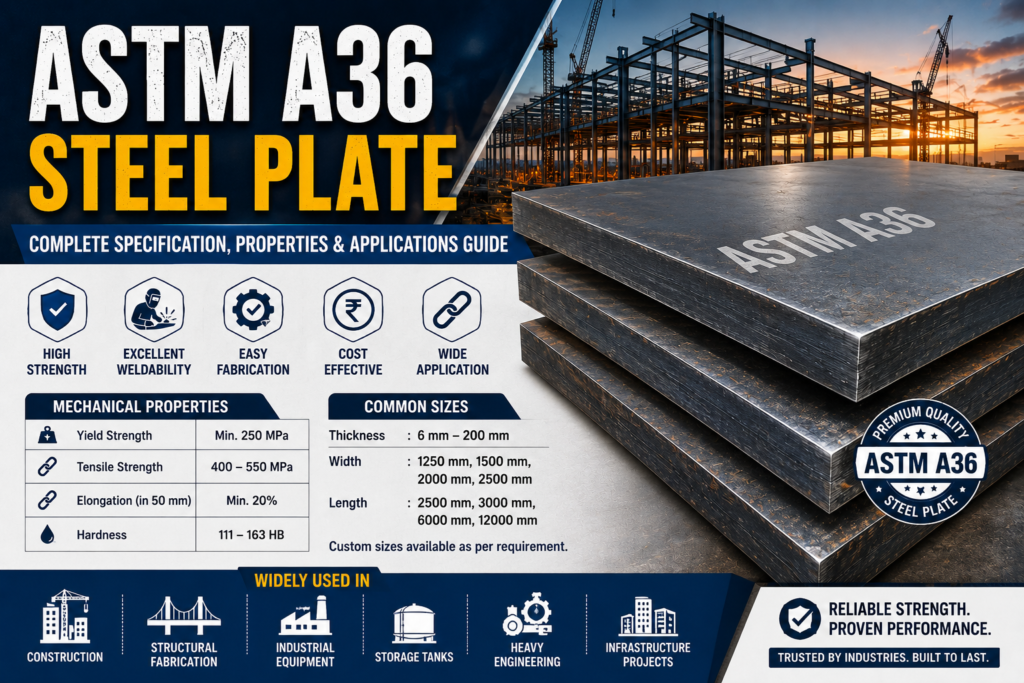
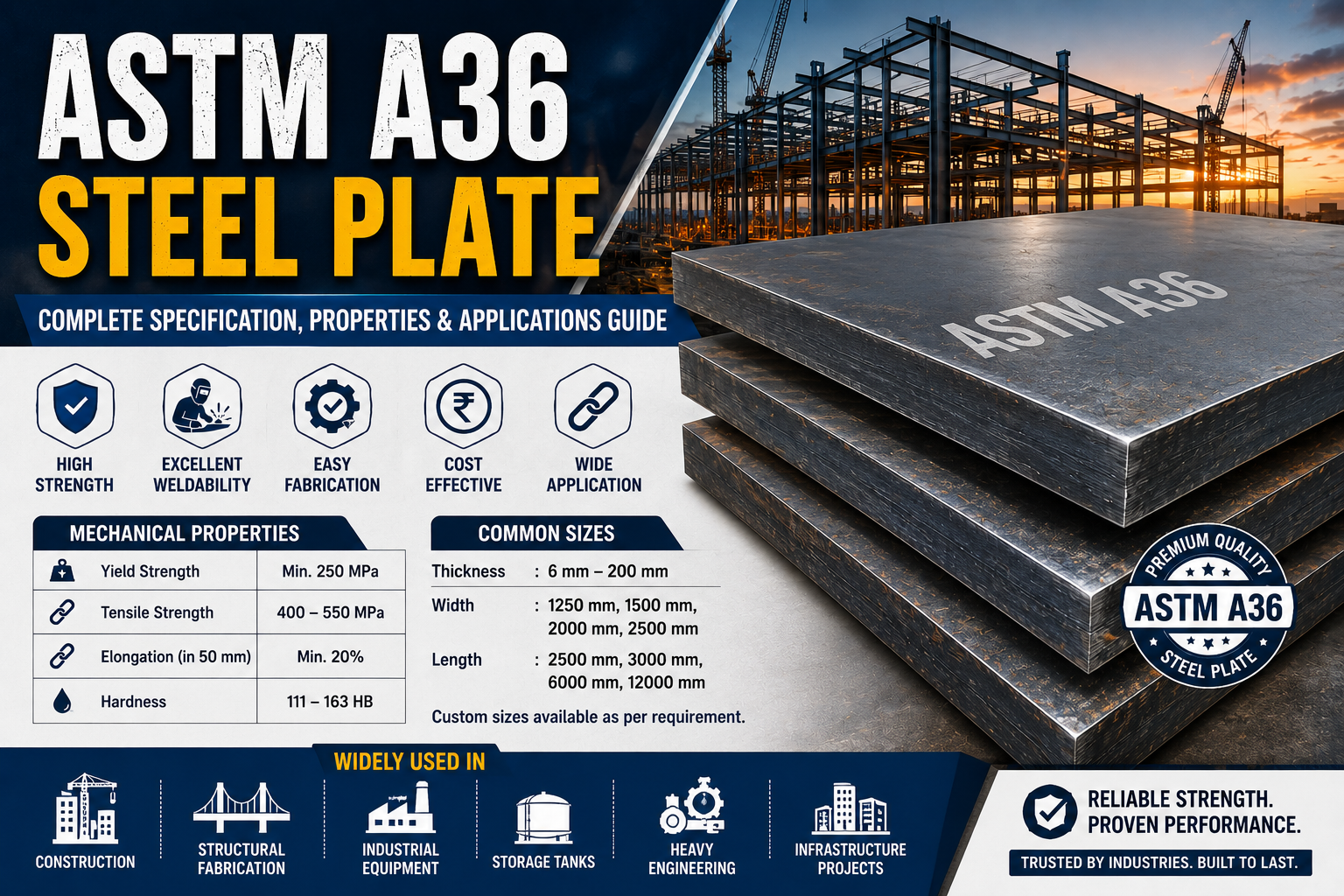
- Yield Strength: Minimum 250 MPa
- Tensile Strength: 400–550 MPa
- Good ductility
- Excellent weldability
- Reliable machinability
Chemical Composition of A36 Steel Plate
Typical composition includes:
- Carbon: Up to 0.25%
- Manganese: 0.80–1.20%
- Silicon: Up to 0.40%
- Copper: Minimum 0.20% (when specified)
This composition helps provide a balance between strength and fabrication performance.
Sizes Available in ASTM A36 Steel Plate
Width and Length Options
Common plate sizes include:
- 1250 mm
- 1500 mm
- 2000 mm
- 2500 mm
Custom cutting and processing services are also available from suppliers.
Applications of ASTM A36 Steel Plate
Construction Industry
The construction sector widely uses astm a36 steel plate for structural frameworks, bridges, commercial buildings, and industrial sheds because of its strength and fabrication flexibility.
Industrial Fabrication
Fabricators prefer a36 carbon steel plate for manufacturing:
- Platforms
- Structural supports
- Equipment bases
- Machine components
Heavy Engineering
Heavy engineering industries use sa36 plate for machinery structures and industrial fabrication requiring durable structural steel.
Storage Tanks and Containers
The material is commonly used in storage tanks and general industrial containers because of its weldability and affordability.
Infrastructure Projects
A36 steel is widely used in infrastructure development projects such as:
- Railway structures
- Industrial warehouses
- Transmission towers
- Structural columns
Advantages of ASTM A36 Steel Plate
Excellent Weldability
One of the biggest advantages of a36 steel plate is its superior weldability, making fabrication easier and more efficient.
Good Mechanical Strength
The material provides dependable tensile and yield strength for structural applications.
Cost-Effective Material
Compared to alloy steel or stainless steel, astm a36 steel plate offers better affordability for large projects.
Easy Machining and Fabrication
A36 steel plates can easily be cut, drilled, bent, and machined without difficulty.
Wide Availability
The material is readily available in multiple dimensions and thicknesses across global and Indian markets.
Difference Between ASTM A36 and SA36 Plate
Understanding SA36 Plate
SA36 plate is the ASME equivalent of ASTM A36 steel plate. Both materials share similar chemical composition and mechanical properties.
The main difference is:
- ASTM A36 is used under ASTM standards
- SA36 is supplied under ASME specifications for pressure-related applications
Industries commonly use both terms interchangeably depending on project requirements.
How to Select the Right A36 Steel Plate
Consider Structural Load Requirements
Always evaluate the strength requirements before selecting plate thickness and dimensions.
Check Fabrication Needs
For projects involving extensive welding and machining, a36 steel plate is often an ideal choice.
Verify Standard Compliance
Ensure the material complies with ASTM or ASME standards.
Choose Trusted Suppliers
Working with reliable suppliers ensures better quality control and certified materials.
Practical Tips Before Buying ASTM A36 Steel Plate
Request Mill Test Certificates
Always ask for proper testing documentation and certification.
Confirm Plate Dimensions
Verify thickness, width, and tolerance requirements carefully before procurement.
Inspect Surface Quality
Ensure the material is free from cracks, rust, and visible defects.
Compare Supplier Experience
Choose experienced suppliers with a strong reputation in industrial steel supply.
Common Mistakes to Avoid
Choosing Incorrect Thickness
Selecting the wrong thickness can affect structural stability and safety.
Ignoring Certification Standards
Using non-certified material may lead to quality and compliance issues.
Focusing Only on Price
Low-cost material may compromise durability and performance.
Overlooking Fabrication Requirements
Always consider welding, machining, and forming requirements before selecting material.
ASTM A36 Steel Plate Market in India
India has a strong demand for astm a36 steel plate because of rapid growth in infrastructure, construction, industrial fabrication, and manufacturing sectors.
Major industrial cities such as Mumbai, Chennai, Kolkata, Ahmedabad, and Visakhapatnam rely heavily on certified structural steel suppliers for construction and engineering projects.
Indian industries commonly use a36 carbon steel plate for:
- Structural fabrication
- Industrial platforms
- Engineering projects
- Warehouse construction
- Machinery manufacturing
The increasing development of infrastructure and industrial facilities continues to drive the demand for ASTM A36 steel plates across India.
Conclusion
ASTM A36 steel plate remains one of the most trusted structural carbon steel materials because of its strength, weldability, affordability, and versatility. Its balanced mechanical properties make it suitable for a wide range of industrial, construction, and engineering applications.
Whether used for structural frameworks, industrial fabrication, machinery components, or infrastructure development, a36 carbon steel plate delivers dependable performance and fabrication ease.
Understanding specifications, mechanical properties, applications, and supplier quality helps industries choose the right sa36 plate for long-term operational reliability and structural safety.
Frequently Asked Questions
What is ASTM A36 steel plate used for?
ASTM A36 steel plate is used for construction, structural fabrication, industrial equipment, storage tanks, and engineering applications.
Is A36 steel plate weldable?
Yes, a36 steel plate offers excellent weldability and fabrication performance.
What is the difference between ASTM A36 and SA36 plate?
SA36 plate is the ASME equivalent of ASTM A36 steel plate, mainly used in pressure-related applications.
Is ASTM A36 suitable for structural applications?
Yes, it is one of the most commonly used structural carbon steel materials worldwide.
What industries use ASTM A36 steel plate?
Industries such as construction, heavy engineering, infrastructure, manufacturing, and fabrication commonly use ASTM A36 steel plates.