Why Refinery Projects Need Special Steel
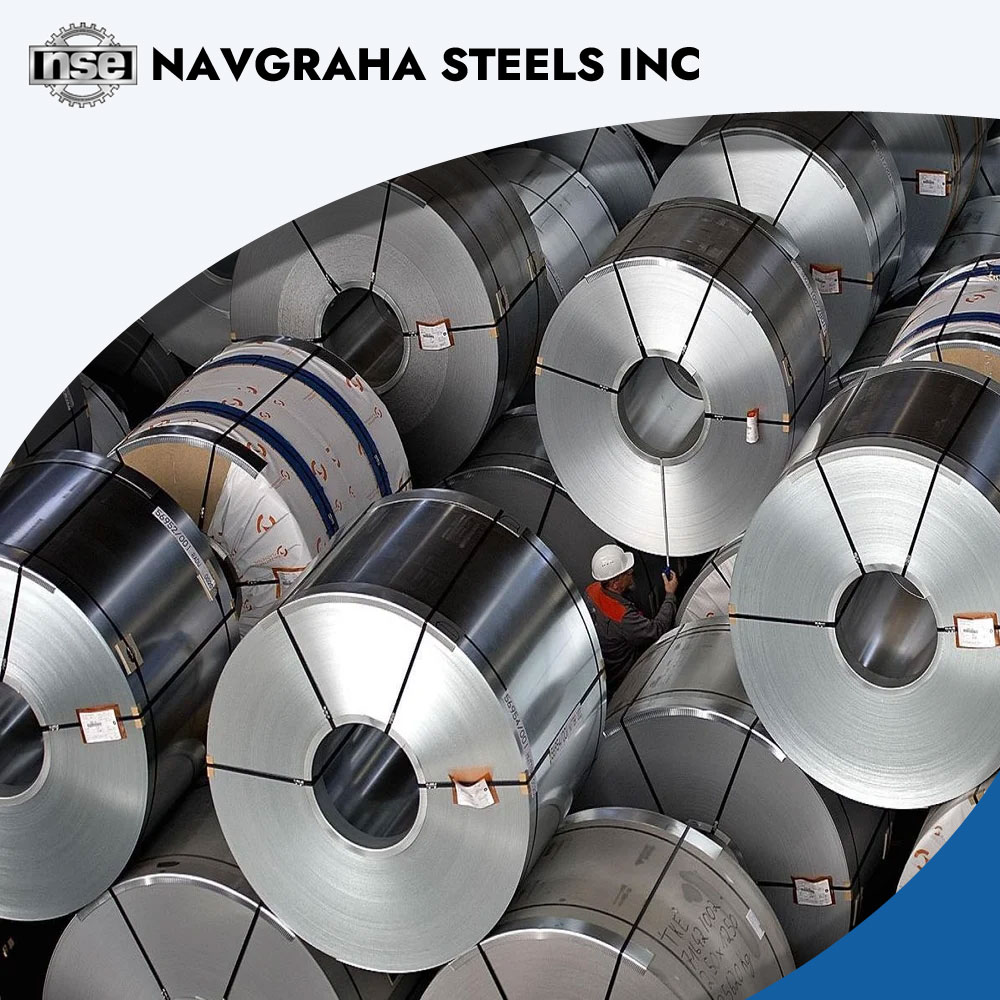
Refineries operate under extreme hydrogen exposure and wet-H₂S environments where ordinary carbon steel quickly becomes brittle and fails. To prevent such damage, engineers use HIC tested coils — materials specially designed to resist hydrogen-induced cracking. At Navgraha Steels Inc, we supply globally approved HIC tested plates, sheets, and coils that meet NACE and ASTM refinery specifications.
Understanding HIC (Hydrogen Induced Cracking)
Hydrogen Induced Cracking (HIC) occurs when atomic hydrogen diffuses into the steel structure and accumulates at inclusions or voids. Over time, this forms internal cracks parallel to the plate surface, leading to catastrophic failure of pressure vessels or storage tanks.
How Hydrogen Causes Steel Damage in Refineries
During desulphurization, hydrocracking, and catalytic reforming processes, wet hydrogen sulfide (H₂S) reacts with steel, releasing hydrogen atoms. These atoms get trapped inside steel, forming micro-cracks — especially in non-HIC-resistant materials.
What Are HIC Tested Coils?
HIC tested coils are carbon or low-alloy steel coils that undergo laboratory testing (as per NACE TM0284 / ASTM G35) to verify their resistance to hydrogen-induced cracking. These coils are tested in simulated H₂S environments to ensure durability under refinery conditions.
Difference Between Normal Carbon Steel and HIC Tested Steel
| Property | Normal Carbon Steel | HIC Tested Steel |
| Hydrogen Resistance | Low | High |
| Sulfide Inclusion | High | Controlled |
| Microstructure | Non-uniform | Clean & homogeneous |
| Applications | General fabrication | Refineries, Petrochemical Plants |
Industry Standards for HIC Testing
- NACE TM0284: Method for evaluating resistance of pipeline and pressure vessel steels to HIC.
- ASTM G35: Standard for lab immersion tests for evaluating resistance to hydrogen blistering.
- API 941 / ASME SA 516 / SA 387: Common standards used for refinery-grade materials.
Applications of HIC Tested Coils
- Pressure vessels & reactors
- Heat exchangers & separators
- Hydrogen desulphurization units
- Storage tanks & pipelines in refineries
- Amine absorbers and sour gas systems
Major Grades & Specifications
Common Grades:
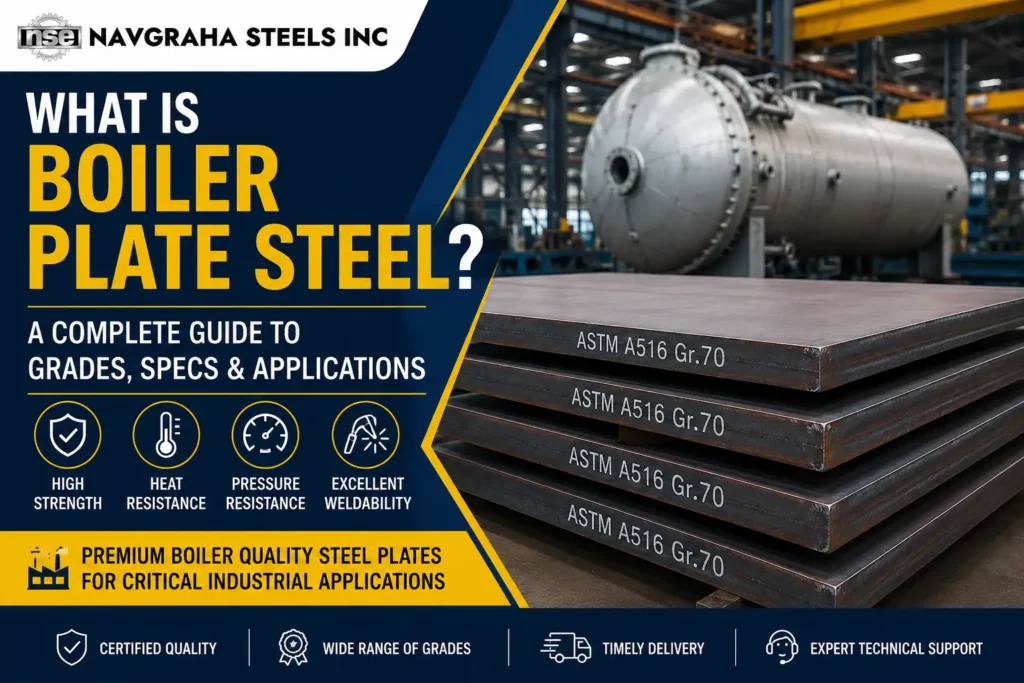
- SA 516 Gr 60 / Gr 70 HIC Tested
- SA 387 Gr 11 / Gr 22 Cl.2 HIC Tested
- ASTM A285, A204 Alloy Steels
Thickness Range: 6 mm – 100 mm
Width: 1500 mm – 3000 mm
Length: As per customer requirement or coil form.
Why Refineries Prefer HIC Tested Material
Using HIC tested coils minimizes downtime, enhances safety, and ensures long-term equipment reliability. It prevents unplanned shutdowns, leakage, and corrosion under H₂S environments — critical for refineries operating 24×7.
Country-Wise Demand
- GCC & Middle East: Saudi Arabia, UAE, Qatar – high demand in oil & gas refineries and desalination plants.
- Africa: Nigeria, Egypt, Algeria – refinery expansion projects.
- Europe & Americas: Maintenance of aging refinery infrastructure and new hydrogen projects.
- India: IOCL, HPCL, and BPCL projects increasingly specify HIC tested coils.
How Navgraha Steels Inc Ensures Quality
At Navgraha Steels Inc, every HIC tested coil comes with:
- Validated Mill Test Certificates (MTC) with NACE TM0284 results
- Ultrasonic & Microstructural Inspection Reports
- IBR & PED compliance for global export
- Sourced from reputed mills like SAIL, AMNS, JSPL, EVONITH
Price Range of HIC Tested Coils
| Grade | Thickness | Price (INR/Ton) | Price (USD/Ton) |
| SA 516 Gr 70 HIC Tested | 10–50 mm | ₹120,000 – ₹185,000 | $1450 – $2200 |
| SA 387 Gr 11 Cl.2 HIC Tested | 8–60 mm | ₹150,000 – ₹200,000 | $1800 – $2400 |
(Prices vary with origin, mill certification, and export destination.)
Conclusion
Refinery environments are unforgiving — only HIC tested coils can withstand hydrogen-rich conditions safely. Choosing the right supplier like Navgraha Steels Inc ensures compliance, reliability, and performance in critical refinery operations. 👉 Contact us today for certified HIC tested plates and coils that meet NACE TM0284, ASTM, and refinery-grade standards.