Corrosion is one of the biggest challenges faced by industries such as oil & gas, marine, chemical processing, and power generation. Exposure to moisture, chemicals, and extreme environments can significantly reduce the lifespan of metals. This is where selecting the right corrosion resistance alloy becomes essential.
Modern engineering relies heavily on corrosion resistance alloy steel and advanced materials that can withstand harsh environments without losing strength or performance. From stainless steel to nickel-based alloys, there are several corrosion resistant steel grades designed to offer durability, safety, and long-term cost savings.
What is a Corrosion Resistance Alloy?
A corrosion resistance alloy is a specially designed metal that resists chemical or electrochemical reactions with its surroundings. These alloys typically contain elements like chromium, nickel, and molybdenum, which form a protective layer on the surface and prevent rust or degradation.
For instance:
- Chromium forms a passive oxide layer
- Nickel improves toughness and stability
- Molybdenum enhances resistance to pitting and crevice corrosion
Because of these properties, corrosion resistance alloy steel is widely used in demanding industrial environments.
Types of Corrosion Resistance Alloys
1. Stainless Steel Alloys
Stainless steel is one of the most commonly used corrosion resistant steel grades due to its versatility and cost-effectiveness.
Common grades include:
- SS 304 – Suitable for general-purpose applications
- SS 316 / 316L – Excellent resistance to marine and chemical exposure
- SS 317 – Better resistance to acids and harsh chemicals
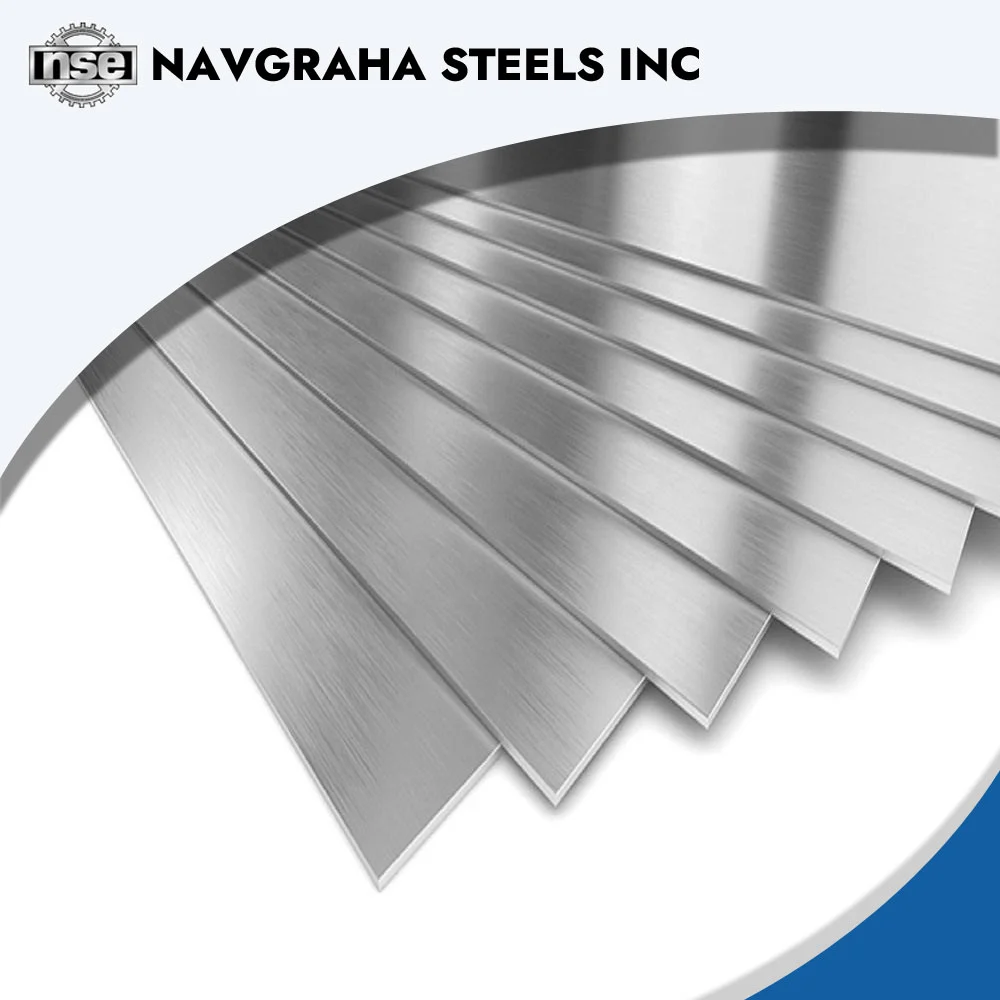
For high-quality stainless steel products, you can explore Navgraha’s range of sheets and plates.
2. Nickel-Based Alloys
Nickel alloys offer superior corrosion resistance and perform well in extreme temperatures and aggressive chemical environments.
Popular alloys include:
- Inconel 625 – Ideal for marine and high-temperature applications
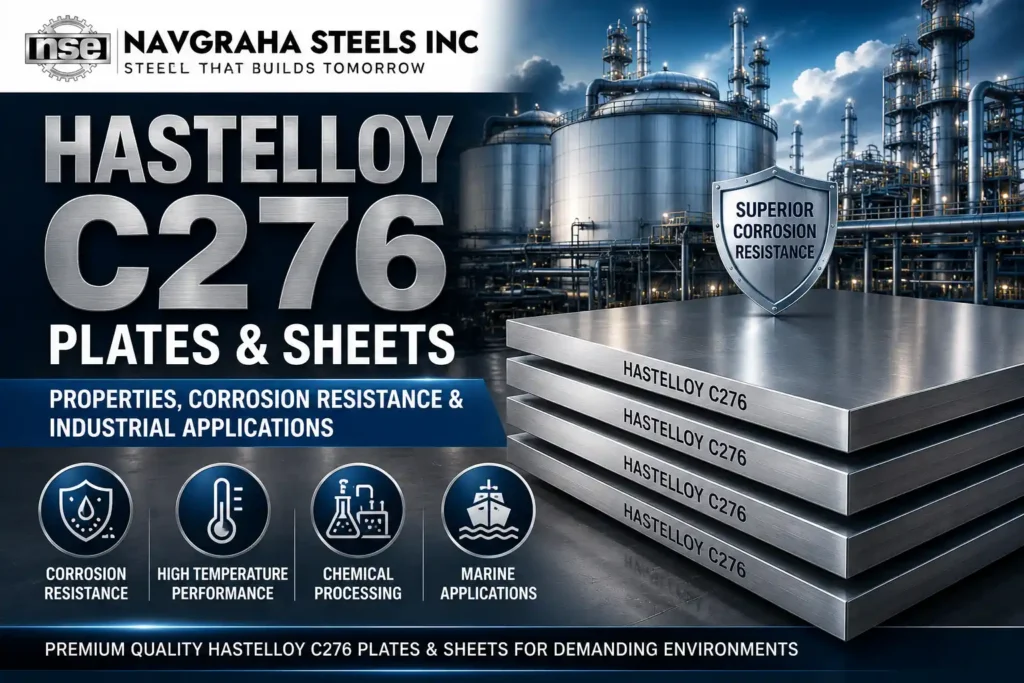
- Hastelloy C-276 – Excellent for chemical processing industries
- Alloy 825 – Resistant to sulfuric and phosphoric acids
These products are widely used in offshore platforms, refineries, and heat exchangers.
3. Duplex and Super Duplex Steel
Duplex steel combines the benefits of austenitic and ferritic stainless steels. It offers high strength and excellent resistance to stress corrosion cracking.
These corrosion resistant steel grades are commonly used in:
- Oil pipelines
- Desalination plants
- Chemical tanks
4. Other Corrosion Resistant Materials
Apart from steel and nickel alloys, other materials also provide excellent corrosion resistance:
- Aluminum alloys – Lightweight and naturally corrosion resistant
- Titanium – Highly resistant to seawater and chemicals
- Copper-nickel alloys – Ideal for marine applications
- Galvanized steel – Zinc coating protects against rust
Top Corrosion Resistant Steel Grades
Choosing the right corrosion resistant steel grades depends on the application and environment. Some widely used options include:
- SS 316 / 316L – Best for marine and chloride-rich environments
- Duplex Steel (2205) – High strength and corrosion resistance
- Hastelloy C-276 – Extreme chemical resistance
- Inconel 625 – High-temperature and oxidation resistance
- Alloy 20 – Excellent resistance to acidic environments
For pricing and availability of premium alloys, you can refer to:
Key Benefits of Corrosion Resistance Alloy Steel
Using corrosion resistance alloy steel provides several advantages:
- Extended service life even in harsh environments
- Reduced maintenance and repair costs
- High resistance to chemicals, moisture, and salts
- Excellent mechanical strength and durability
- Improved safety in industrial operations
These benefits make corrosion-resistant materials a smart investment for long-term industrial use.
Applications of Corrosion Resistance Alloys
1. Oil & Gas Industry
Corrosion-resistant alloys are widely used in pipelines, offshore rigs, and refineries where exposure to harsh chemicals and seawater is constant.
2. Chemical Processing Plants
Materials like Hastelloy and Inconel are used in reactors, storage tanks, and piping systems to handle corrosive chemicals safely.
3. Marine Industry
Saltwater can be extremely corrosive, making materials like SS 316 and nickel alloys essential for ships and offshore structures.
4. Power Plants
Boilers, heat exchangers, and turbines require corrosion resistance alloy steel to withstand high temperatures and pressure.
5. Food & Pharmaceutical Industry
Stainless steel ensures hygiene, durability, and corrosion resistance in processing equipment.
Factors to Consider When Selecting Corrosion Resistance Alloys
Choosing the right corrosion resistance alloy requires careful evaluation of several factors:
- Environmental conditions (marine, acidic, high temperature)
- Strength and load requirements
- Cost-effectiveness
- Fabrication and welding properties
- Availability of materials
For example, stainless steel may be sufficient for general applications, while extreme environments may require nickel-based alloys.
Understanding Types of Corrosion
To select the right material, it is important to understand common types of corrosion:
- Pitting corrosion – Small, localized holes
- Crevice corrosion – Occurs in confined spaces
- Galvanic corrosion – Between dissimilar metals
- Stress corrosion cracking – Due to stress and chemicals
- Uniform corrosion – Even material degradation
Different corrosion resistant steel grades are designed to combat specific types of corrosion.
Conclusion
Selecting the right corrosion resistance alloy is critical for ensuring durability, efficiency, and safety in industrial operations. Whether you choose stainless steel, duplex steel, or advanced nickel-based alloys, each material offers unique advantages depending on the environment.
By understanding various corrosion resistant steel grades and their applications, industries can reduce maintenance costs, improve performance, and extend the lifespan of their equipment. Investing in high-quality corrosion resistance alloy steel is not just a technical decision—it’s a long-term business strategy.
FAQs
1. What is a corrosion resistance alloy?
A corrosion resistance alloy is a metal specifically designed to resist damage caused by moisture, chemicals, and environmental exposure. These alloys typically contain elements like chromium, nickel, and molybdenum, which form a protective layer and prevent rust or degradation.
2. Which are the most common corrosion resistant steel grades?
Some of the most widely used corrosion resistant steel grades include SS 304, SS 316/316L, Duplex Steel 2205, and superalloys like Inconel 625 and Hastelloy C-276. Each grade is suitable for different environments such as marine, chemical, or high-temperature applications.
3. Why is corrosion resistance alloy steel important in industries?
Corrosion resistance alloy steel is important because it increases the lifespan of equipment, reduces maintenance costs, and ensures safety in harsh environments. It is widely used in industries like oil & gas, chemical processing, marine, and power generation.
4. How do I choose the right corrosion resistance alloy?
Choosing the right corrosion resistance alloy depends on factors such as environmental conditions, temperature, exposure to chemicals, strength requirements, and budget. For example, stainless steel works well for general use, while nickel alloys are better for highly corrosive environments.
5. What is the difference between stainless steel and nickel alloys in corrosion resistance?
Stainless steel offers good corrosion resistance for general applications, while nickel alloys provide superior performance in extreme conditions such as high temperatures and strong chemical exposure. This makes nickel-based corrosion resistance alloy steel ideal for demanding industrial applications.