Steel products used in industrial projects must meet strict quality standards. ASTM and ASME standards ensure consistency, safety, and reliability. Without these certifications, projects risk rejection, failure, and legal issues. Therefore, understanding these standards is essential for buyers, engineers, and procurement teams.
ASTM standards for steel define material properties. ASME standards for steel govern design, fabrication, and safety requirements. Although they often overlap, their purposes differ significantly. Knowing the difference helps in proper steel selection.
What Are ASTM Standards?
ASTM stands for the American Society for Testing and Materials. It develops voluntary consensus standards for materials, products, systems, and services. In steel manufacturing, ASTM material specifications define chemical composition and mechanical properties.
ASTM standards focus primarily on material quality. They ensure steel meets required tensile strength, yield strength, hardness, and corrosion resistance levels. Because of this, ASTM compliance is critical in global steel trade.
Common ASTM Standards for Steel Products
Several ASTM steel grades are widely used across industries:
- ASTM A106 pipe specification for high-temperature service
- ASTM A53 pipe standard for structural and mechanical applications
- ASTM A240 stainless steel plate for pressure vessels
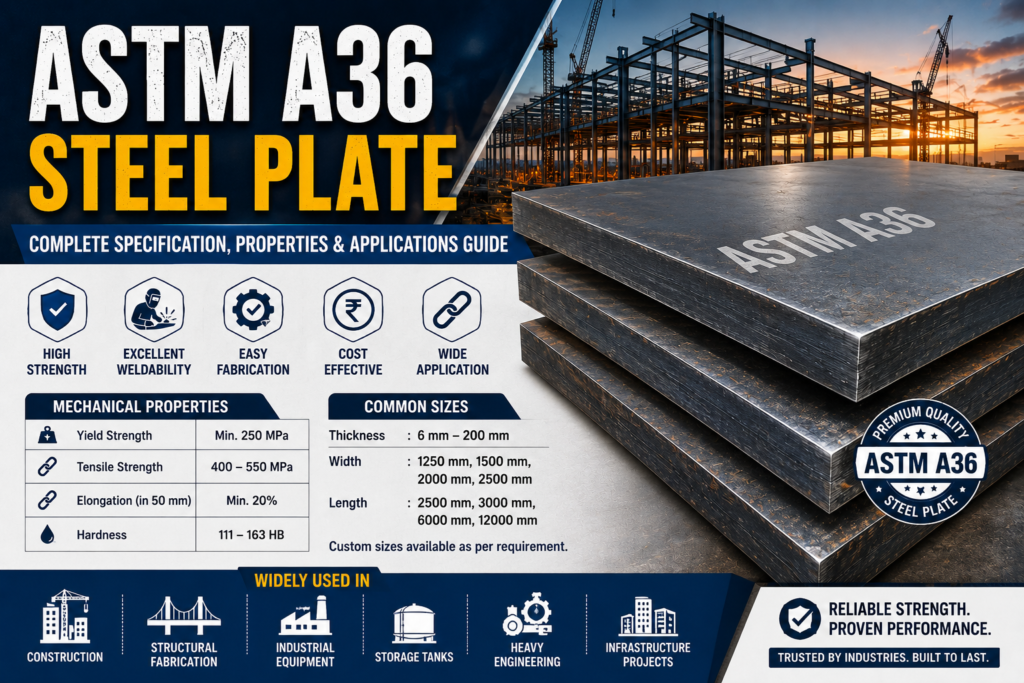
- ASTM A36 carbon steel for structural applications
Each specification clearly outlines testing requirements and permissible tolerances. Therefore, buyers can confidently compare products across suppliers.
Why ASTM Standards Matter
ASTM standards ensure material traceability. They also require strict testing procedures before product dispatch. As a result, buyers receive predictable performance and durability.
Furthermore, most international projects demand ASTM compliance. Without ASTM certification, steel products may fail inspection during procurement.
What Are ASME Standards?
ASME stands for the American Society of Mechanical Engineers. Unlike ASTM, ASME focuses on design codes and safety regulations. These standards apply mainly to boilers, pressure vessels, and piping systems.
ASME standards ensure systems operate safely under pressure and high temperatures. Therefore, they are critical in oil and gas, petrochemical, and power industries.
Read Also: Steel Grades Explained with Chart: Types, Products & Applications
Important ASME Codes for Steel
Some widely referenced ASME codes include:
- ASME Boiler and Pressure Vessel Code (BPVC)
- ASME Section II material specifications
- ASME B16.5 flange standard
- ASME B31.3 process piping code
ASME Section II often adopts ASTM material specifications. However, ASME assigns an “SA” prefix instead of “A.” For example, ASTM A240 becomes ASME SA240.
Why ASME Certification Is Critical
ASME compliance guarantees safety in pressurized systems. Additionally, many international EPC contractors require ASME-approved materials. Without it, fabrication approval may be denied.
Therefore, ASME certification protects both project integrity and worker safety.
ASTM vs ASME Standards – Key Differences
Although ASTM and ASME standards appear similar, they serve different purposes.
ASTM defines material properties. ASME defines how materials are used in design and fabrication. ASTM focuses on testing. ASME focuses on application and system safety.
For example, ASTM A106 specifies pipe material properties. Meanwhile, ASME B31.3 governs how that pipe functions in process piping systems.
Another key difference lies in certification. ASTM compliance ensures product quality. ASME certification ensures safe design under operating conditions.
Understanding ASTM vs ASME standards helps procurement teams avoid costly mistakes. Therefore, both standards often work together in industrial projects.
How to Read ASTM and ASME Material Codes
Steel grades may seem complex at first glance. However, understanding the coding system simplifies procurement decisions.
Take ASTM A106 Grade B as an example:
- “A” indicates ferrous material
- “106” identifies the specification number
- “Grade B” defines strength level
Similarly, ASME SA240 mirrors ASTM A240. The “SA” prefix indicates ASME adoption. Therefore, materials may share properties but fall under different governing codes.
Knowing how to read ASTM material codes prevents ordering errors. Additionally, it ensures compatibility with project specifications.
Importance of Certifications in Steel Procurement
Certifications play a crucial role in industrial supply chains. Buyers must verify compliance before purchase.
What Is a Mill Test Certificate?
A Mill Test Certificate (MTC) confirms that steel meets required standards. It includes chemical composition, mechanical properties, and heat numbers. EN 10204 certification typically covers this documentation.
Type 3.1 certification confirms manufacturer testing. Meanwhile, 3.2 certification includes third-party inspection verification.
Without proper MTC documentation, materials may face rejection during quality audits.
Why Compliance Verification Is Essential
Non-compliant steel can cause structural failure. Additionally, it may result in project delays and financial loss. Therefore, verifying ASTM and ASME certification reduces risk significantly.
Compliance also ensures long-term durability in harsh environments. Consequently, certified materials provide better lifecycle value.
Industries That Rely on ASTM & ASME Standards
Several industries depend heavily on ASTM and ASME standards for steel products.
Oil and gas projects require ASME pressure vessel standards for pipelines and processing units. Petrochemical plants demand corrosion-resistant ASTM steel grades. Power generation facilities rely on high-temperature ASTM pipe standards.
Marine applications also require certified materials for durability against saltwater exposure. Furthermore, construction and infrastructure projects use ASTM A36 carbon steel for structural integrity.
Because these industries operate under strict regulations, compliance remains non-negotiable.
Why Both Standards Matter in Global Trade
International trade depends on uniform quality benchmarks. ASTM standards provide consistent material specifications worldwide. Meanwhile, ASME ensures safe system integration.
When steel products meet both ASTM and ASME standards, they gain broader project acceptance. Therefore, suppliers offering certified materials gain competitive advantage.
In addition, global EPC contractors often specify both standards simultaneously. As a result, understanding their relationship improves procurement efficiency.
Conclusion
ASTM and ASME standards form the backbone of industrial steel compliance. ASTM standards for steel define material properties and testing requirements. In contrast, ASME standards govern design, safety, and application.
Although their functions differ, both standards work together. ASTM ensures quality. ASME ensures safety in operation. Therefore, choosing certified steel products reduces project risk and ensures long-term performance.
For buyers, engineers, and procurement teams, understanding ASTM vs ASME standards is essential. Proper compliance verification protects investment, ensures safety, and supports successful project execution.
Frequently Asked Questions (FAQs)
1. What is the main difference between ASTM and ASME standards?
ASTM standards define the chemical composition and mechanical properties of steel materials. ASME standards focus on design codes and safety requirements for pressure vessels, boilers, and piping systems. ASTM ensures material quality, while ASME ensures safe application.
2. Are ASTM and ASME standards interchangeable?
In many cases, ASME adopts ASTM material specifications with minor changes. For example, ASTM A240 becomes ASME SA240. However, ASTM focuses on material testing, while ASME governs system design and usage, so they are not fully interchangeable.
3. Why are ASTM standards important in steel procurement?
ASTM standards ensure steel products meet defined quality benchmarks. They specify chemical composition, strength, and testing methods. Without ASTM compliance, materials may fail inspection or be rejected in industrial projects.
4. When is ASME certification required?
ASME certification is required in projects involving boilers, pressure vessels, and high-pressure piping systems. Industries such as oil and gas, petrochemical, and power generation typically mandate ASME-compliant materials.
5. What is a Mill Test Certificate (MTC) in steel supply?
A Mill Test Certificate (MTC) confirms that steel products comply with ASTM or ASME standards. It includes details about chemical composition, mechanical properties, heat numbers, and inspection results, ensuring traceability and quality assurance.